☰ Table of Contents
A motor grader is a heavy machine designed to make flat surfaces. It cuts high spots and fills low spots with remarkable precision. Road crews use them, site prep contractors use them, and anyone who needs a precise flat surface relies on this powerful machine.
This complete guide explains exactly what a motor grader is, how it functions, and everything you need to know before stepping into the operator’s cab.
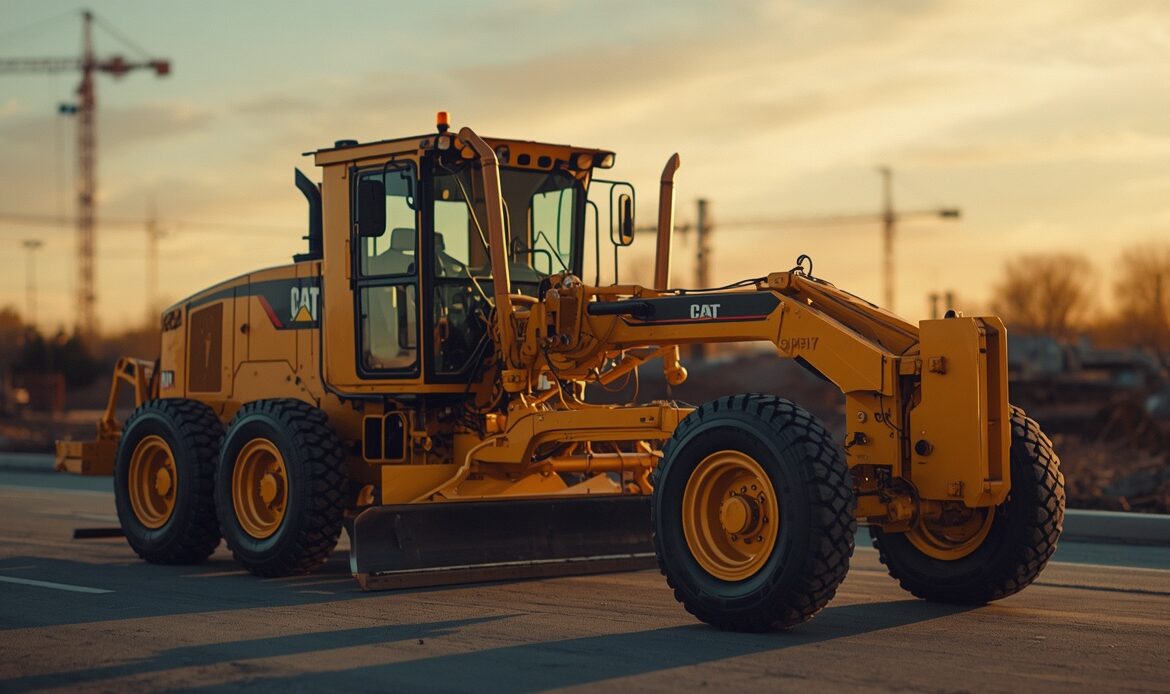
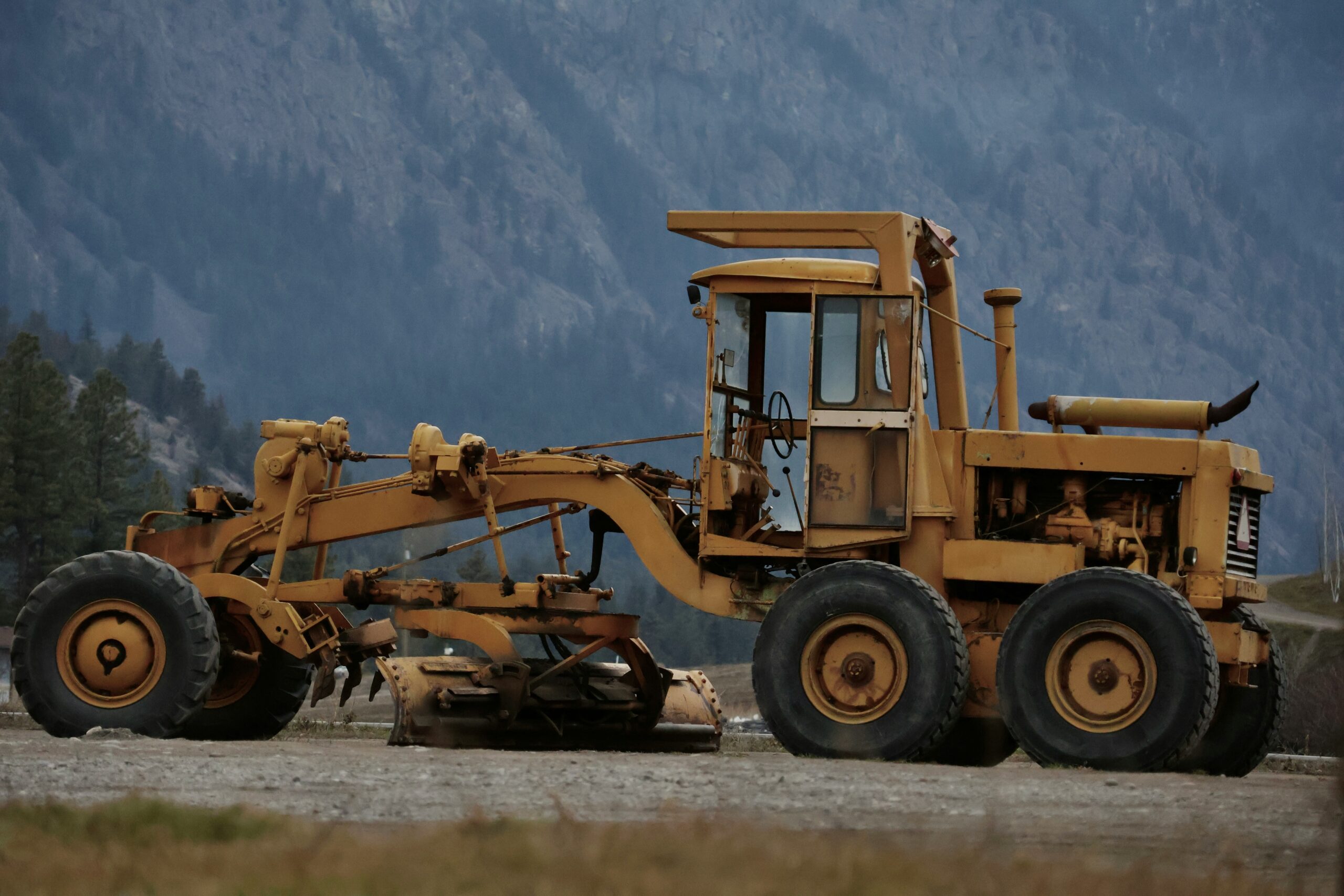
A motor grader is a long machine with three axles. The front axle holds two steerable wheels. The rear axle holds two large drive wheels. A third axle sits under the cab. The machine has a long adjustable blade between the front and rear axles, and the operator sits securely on top of the rear axle.
The blade is the main tool of the equipment. It cuts dirt, moves dirt, and shapes dirt. The blade angles left or right, tilts forward or backward, and shifts side to side. These precise movements create any slope or crown you need for your project.
Generally, these graders range from 12,000 to 40,000 pounds. Smaller models work perfectly on driveways and parking lots. Larger ones work on highways and commercial airports. The most common size globally is a 20,000-pound motor grader equipped with a 12-foot blade.
- The Frame: A single steel beam connecting the front and rear axles. It articulates in the middle. This means the front half turns left or right while the rear stays straight, allowing the motor grader to turn in a surprisingly small circle.
- The Cab: Sits on the rear frame, giving the operator a clear view of the blade below. Controls include a steering wheel, levers, and joysticks. Modern models have electronic controls, while older units use mechanical linkages.
- The Blade: A curved steel plate that measures 10 to 16 feet long. The blade has replaceable cutting edges. These edges wear down against rocks and asphalt, so you simply flip or replace them when worn.
- The Circle: This component connects the blade to the frame and rotates 360 degrees. Rotation lets you turn the blade completely backward for back-grading. The circle also shifts side to side, extending the blade beyond the tires.
- The Ripper: Many graders come with a rear ripper attachment. It has one or three strong shanks that dig into hard ground, allowing you to rip compacted soil or old asphalt before leveling.
The machinery completes its work in three main steps. First you cut, second you move, third you level.
- Step 1 – Cutting: Lower the blade into the ground so the teeth dig into the material. As the machine moves forward, the blade cuts a thin layer. A typical cut depth is 1 to 2 inches per pass. A steep blade angle cuts deeper, while a shallow angle cuts wider.
- Step 2 – Moving Material: The curved face of the blade traps dirt and rolls the material from the cutting edge to the top, spilling it over the side. You control this spill direction. Angle the blade left, and material spills left. You use this spilled material to fill low spots until the surface is flat.
- Step 3 – Leveling: You finish with a leveling pass where the blade sits completely flat on the ground. The equipment shaves off high points and leaves material in low points. Each pass gets the surface closer to perfect.
Precision Fact: A skilled operator watches the blade edge and can hold it within a quarter-inch of the target grade. This level of precision makes the motor grader unique. No other machine matches this accuracy.
- Road Construction: Graders build the base for roads. They spread gravel in precise layers, cut deep drainage ditches, and shape the road crown so water effectively runs off the sides.
- Parking Lots: A motor grader levels the subgrade for asphalt or concrete. The machine ensures that water flows exactly to the drains and prevents standing puddles.
- Driveways: A small grader easily manages residential driveways. It creates a smooth base for gravel and maintains existing paths by reshaping the surface.
- Snow Removal: Airports and cities use them to clear snow. The blade pushes heavy snow to the side much faster than a standard plow on long runways.
- Land Leveling: Farmers use this equipment to level their agricultural fields. Flat fields hold water evenly, which produces better crops.
Pro Tip for Paving: After a motor grader finishes a parking lot or driveway, you must compact the surface properly. We recommend pairing your machine with the Typhon Fury 1.5 Ton Vibratory Compactor for a rock-solid, professional finish.
| Machine Comparison | Key Differences | Best Used For |
|---|---|---|
| Motor Grader vs Bulldozer | A bulldozer pushes large amounts of dirt but lacks accuracy. A motor grader moves less dirt per pass but is incredibly accurate. | Dozers for rough work; Graders for fine finishing. |
| Grader vs Skid Steer | A skid steer manages small, confined areas perfectly. A motor grader works best on long, open stretches. | Skid steers for small pads; Graders for roads and runways. |
| Grader vs Box Blade | A tractor box blade lacks the weight and precision of a motor grader. It also cannot tilt or articulate in the same way. | Box blades for home use; Graders for professional sites. |
Inside the cab, you sit high above the ground and see the entire blade. Your left hand controls the steering wheel, your right hand manages the blade levers, and your feet control the throttle and brakes.
During active work, you drive forward slowly at 2 to 5 miles per hour. When traveling between jobs, a motor grader can drive up to 20 miles per hour, riding smoothly on its long wheelbase.
Operating this machine means you make small adjustments constantly. A tiny quarter-inch of blade movement dramatically changes the final grade. You must watch the ground ahead, feel the equipment respond, and correct any dip or bump immediately.
Learning Curve: Becoming a skilled operator takes 6 to 12 months of daily practice. A beginner leaves messy washboard patterns. An expert leaves a smooth, flawless ribbon of dirt.
| Equipment Size / Type | Estimated Price Range |
|---|---|
| New Small Grader | $80,000 – $150,000 |
| New Full-Size Unit | $200,000 – $500,000 |
| Used Machine (Good Condition) | $30,000 – $100,000 |
| Rental Machine | $500 – $1,500 per day |
If you are on a budget, older machines from the 1980s and 1990s still work exceptionally well. They lack fancy electronics, but they grade effectively and are much cheaper to repair.
- Change the engine oil every 250 working hours.
- Grease the circle gear and blade pivot points daily.
- Grease the central articulation joint on a weekly basis.
- Replace the steel cutting edges when they are worn down to 1 inch.
- Check hydraulic fluid weekly and blow clean the radiator daily in dusty conditions.
A well-maintained motor grader easily lasts 15,000 to 20,000 hours. Many units built in the 1970s are still hard at work on farms and smaller construction sites today.
Reasons to Buy
- You build roads regularly
- You maintain long gravel driveways
- You do site prep for housing
- You clear snow on long runways
Reasons to Rent
- Occasional driveway grading
- One-time short projects
- Avoiding long-term maintenance
- No dedicated operator on staff
A motor grader is a highly specialized tool. It does one job perfectly: making flat surfaces. No other machine matches its precision, and no other equipment works as fast on long stretches.
Now you know exactly what a motor grader is, how it works, and where to use one. Take this knowledge and apply it to your next successful project.
▶ Motor Grader Overview – Watch It Work
🔗 See Also: Upgrade Your Job Site Compaction
View Typhon Fury 2-Ton Mini Road Roller →Ready to find the perfect motor grader or road roller for your project? We provide top-quality machinery shipped anywhere in the world. Get a free quote from our team today.
Get a Free Quote →Heavy equipment content powered by TyphonMachinery.com