☰ Table of Contents
- 1. Uneven Tire Wear Patterns
- 2. Excessive Play in Articulation Joints
- 3. Tandem Housing Leaks and Noise
- 4. Loose or Broken Frame Bolts
- 5. Circle Drive Gear Damage
- 6. Hydraulic Cylinder Mounting Wear
- 7. Frame Cracking Near Stress Points
- 8. The Financial Reality of Undercarriage Neglect
- 9. Inspection Routines
- 10. Training Operators to Spot Problems
Motor Grader Undercarriage Wear never announces itself. There is no warning light. No alarm. No dashboard message. Just slow, quiet destruction happening beneath the machine. Every shift. Every pass. Every mile.
Motor Grader Undercarriage Wear kills machines from the bottom up. Owners watch the engine. Watch the motor grader hydraulic system. Watch the blade. Meanwhile, the undercarriage quietly falls apart. By the time symptoms appear, damage is severe. Repair costs explode. Machine lifespan shrinks.
The undercarriage carries the entire machine weight. It absorbs every impact. Every bump. Every uneven surface. It endures conditions that destroy lesser components. Yet it receives the least attention during maintenance.
Seven silent warnings reveal undercarriage problems. Miss them and pay thousands. Catch them early and save the machine.
Tires tell the first story. Look at them closely. Really closely.
Uneven wear means misalignment. Misalignment means undercarriage problems. The front axle shifts. The tandems move out of position. Geometry changes. Tires wear abnormally.
Motor Grader Undercarriage Wear shows up first in tire patterns. Cupping indicates worn bushings. Scalloping indicates loose components. One-sided wear indicates bent linkages. Each pattern points to a specific problem.
Measure tread depth across every tire. Compare positions. Front versus rear. Left versus right. Differences exceeding three millimeters demand investigation.
Check tire pressure too. Uneven pressure accelerates wear. Accelerated wear masks undercarriage issues. Proper pressure reveals true alignment problems.
Motor Grader Undercarriage Wear inspections start at ground level. Tires first. Everything else second.
Graders articulate. The center joint allows steering and maneuverability. That joint wears over time. Wear creates play. Play creates instability.
Check articulation play monthly. Park the machine on flat ground. Turn the steering fully left. Then fully right. Watch the center joint. Excessive movement indicates worn pins or bushings.
Motor Grader Undercarriage Wear accelerates when articulation joints loosen. The machine wobbles during operation. Wobble transmits stress through the frame. Frame stress causes cracks. Cracks lead to catastrophic failure.
Grease articulation points daily. Grease flushes contamination. Contamination causes wear. Wear causes play. Daily greasing prevents the entire chain.
Worn articulation pins require replacement. Bushing replacement follows. The job takes hours. The cost reaches thousands. Motor Grader Undercarriage Wear prevention costs pennies by comparison.
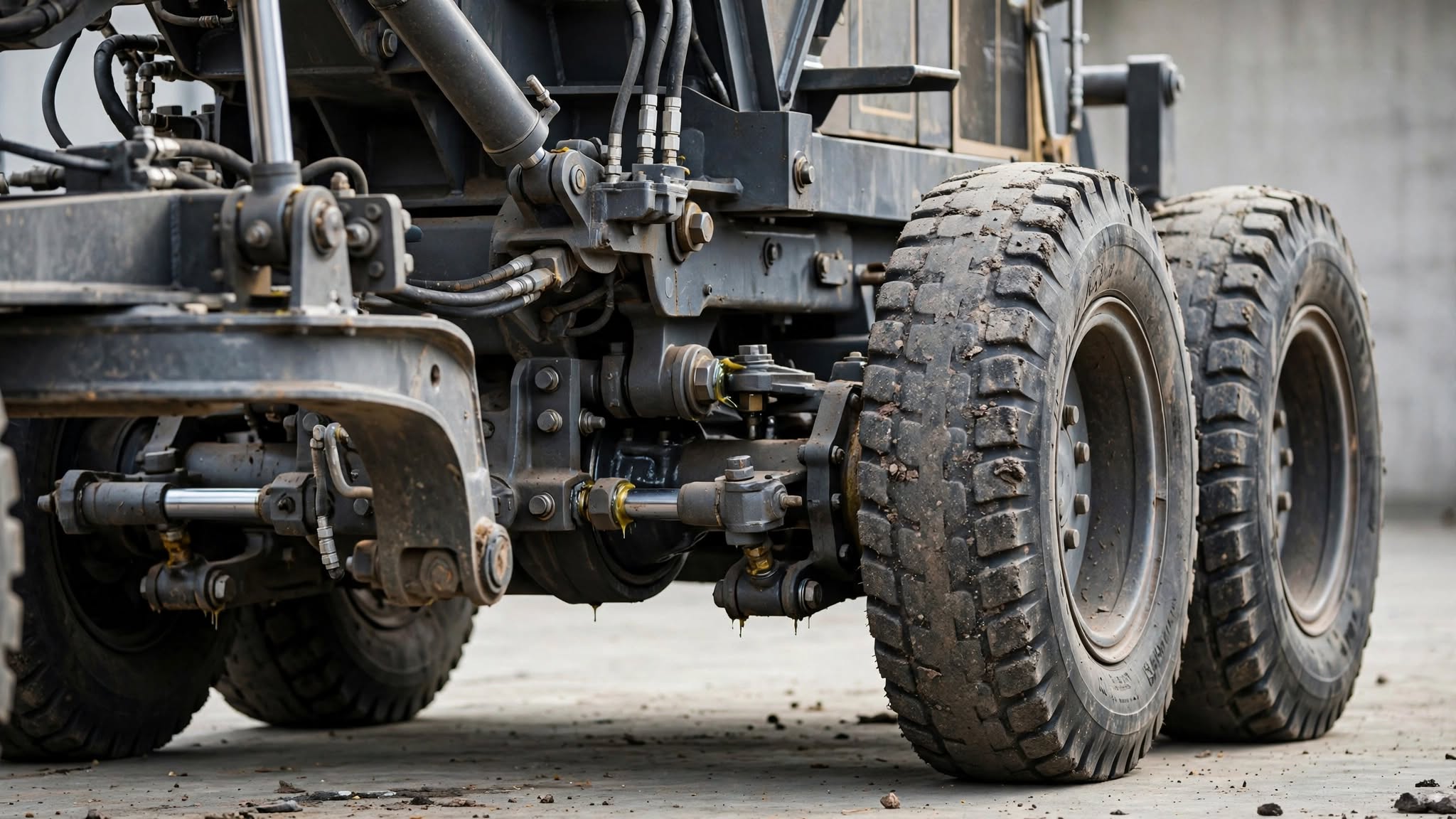
Tandem housings contain gears, bearings, and oil. Oil lubricates. Lubrication prevents wear. Leaks remove lubrication. Wear accelerates immediately.
Look under the machine daily. Oil stains indicate leaks. Fresh oil looks wet. Old oil collects dirt. Both signal problems.
Listen during operation. Whining noises from tandems indicate bearing wear. Grinding noises indicate gear damage. Clicking noises indicate loose components. Motor Grader Undercarriage Wear produces distinct sounds. Trained ears catch problems early.
Check tandem oil levels weekly. Low levels indicate leaks. Contaminated oil indicates internal wear. Metal particles in oil indicate serious damage. Lab analysis confirms findings.
Tandem rebuilds cost five to fifteen thousand dollars. Replacement units cost more. Motor Grader Undercarriage Wear prevention through daily checks avoids these expenses entirely.
Frame bolts hold everything together. Literally. Loose bolts allow movement. Movement creates stress. Stress cracks frames. Cracked frames end machine life.
Walk around the machine weekly. Check every visible bolt. Frame bolts. Crossmember bolts. Hitch bolts. Drawbar bolts. Any loose bolt demands immediate attention.
Motor Grader Undercarriage Wear includes bolt fatigue. Bolts stretch over time. Stretched bolts lose clamping force. Loose connections follow. Torque specifications exist for every bolt. Follow them precisely.
Broken bolts indicate serious problems. Vibration causes breakage. Vibration sources include worn bearings. Worn bearings indicate undercarriage wear. The cycle continues until failure.
Replace suspect bolts proactively. Grade eight bolts minimum. Cheap bolts fail under load. Motor Grader Undercarriage Wear prevention requires quality hardware.
The circle drive rotates the blade. Gears mesh constantly. Wear accumulates. Teeth chip. Backlash increases. Blade control suffers.
Inspect circle gears monthly. Remove the cover. Look at tooth condition. Chipped teeth indicate wear. Worn teeth indicate advanced damage. Missing teeth indicate imminent failure.
Motor Grader Undercarriage Wear affects circle drive through misalignment. Worn circle wear strips allow movement. Movement misaligns gears. Misaligned gears wear rapidly. Rapid wear destroys the circle assembly.
Circle repairs cost ten to twenty thousand dollars. Complete circle replacement exceeds thirty thousand. Motor Grader Undercarriage Wear prevention through regular inspection saves these amounts.
Grease circle gears properly. Correct grease type matters. Wrong grease attracts debris. Debris accelerates wear. Manufacturer specifications guide grease selection.
Cylinders mount to the frame through pins and bushings. Pins wear. Bushings wear. Mounting points weaken. Cylinder operation becomes erratic. Blade control suffers.
Check cylinder mounts monthly. Look for worn pins. Look for elongated holes. Look for cracked mounts. Motor Grader Undercarriage Wear shows clearly at mounting points.
Worn pins cause cylinder misalignment. Misalignment stresses cylinder rods. Rod stress causes bending. Bent rods destroy seals. Seal destruction causes leaks. Leaks reduce performance. The chain continues.
Replace worn pins immediately. Replace worn bushings simultaneously. Partial repairs waste time. Complete repairs solve problems. Motor Grader Undercarriage Wear demands thorough solutions.
Frames crack. Always near stress points. Welded joints. Bolt holes. Transition areas. Cracks start small. Cracks grow. Frames fail.
Inspect frames quarterly. Clean the surface first. Dirt hides cracks. Use bright light. Use magnification. Look carefully at every weld. Every hole. Every transition.
Motor Grader Undercarriage Wear concentrates stress at specific locations. Front frame section. Articulation joint area. Rear frame behind tandems. These areas demand extra attention.
Small cracks require immediate repair. Welding stops crack growth. Reinforcement plates add strength. Ignoring cracks allows growth. Growing cracks become structural failures. Structural failures scrap machines.
Frame repair costs vary widely. Minor welding costs hundreds. Major reconstruction costs tens of thousands. Motor Grader Undercarriage Wear prevention through early detection saves machines entirely.
Undercarriage repairs rank among the most expensive maintenance items. Tandem rebuilds. Frame repairs. Circle replacements. Articulation overhauls. Each costs thousands. Combined, they exceed the machine’s value.
Downtime costs add more. A machine in the shop earns nothing. Projects delay. Contracts suffer. Reputation damaged. Motor Grader Undercarriage Wear creates ripple effects throughout the business.
Prevention costs almost nothing. Daily inspections take fifteen minutes. Weekly greasing takes thirty minutes. Monthly torque checks take an hour. Quarterly frame inspections take two hours. Total time investment remains minimal.
Motor Grader Undercarriage Wear prevention delivers massive returns. Extended machine life. Reduced repair costs. Improved reliability. Higher resale value. Every benefit compounds over time.
One fleet implemented strict undercarriage maintenance. Tracked results over five years. Machine lifespan increased forty percent. Repair costs dropped thirty-five percent. Resale values increased twenty percent. The program paid for itself hundreds of times over.
Daily Undercarriage Inspection Routine
- Morning walkaround: Look for leaks. Look for loose bolts. Look for damaged components. Listen for unusual noises.
- During operation: Feel for vibrations. Listen for new sounds. Watch for handling changes. Note any abnormalities.
- End of shift: Check grease points. Check oil levels. Check for new damage. Record findings in logbook.
Motor Grader Undercarriage Wear reveals itself through these simple observations. Consistency catches problems early. Early detection saves money.
Monthly Maintenance Tasks
Grease all fittings. Check all bolts. Inspect all pins. Measure tire wear. Check oil levels. Test articulation. Examine circle gears. Look for frame cracks.
Motor Grader Undercarriage Wear prevention requires these monthly tasks. Skipping them allows wear to accelerate. Accelerated wear leads to failures. Failures cost money.
Document everything. Records reveal trends. Trends predict failures. Predictions allow planned repairs. Planned repairs cost less than emergencies.
Annual Professional Inspection
Bring in specialists annually. Professional inspectors find problems missed during daily routines. Ultrasonic testing reveals internal cracks. Magnetic particle inspection finds surface defects. Dye penetrant testing exposes hidden damage.
Motor Grader Undercarriage Wear professionals use specialized tools. Tools that cost thousands. Tools that pay for themselves through early detection.
Annual inspections cost one to three thousand dollars. Repairs discovered early cost hundreds. Repairs discovered late cost thousands. Motor Grader Undercarriage Wear economics favor early detection every time.
Operators see the machine daily. They notice changes first. Train them to recognize warning signs.
Teach tire wear patterns. Teach noise recognition. Teach vibration awareness. Teach handling changes. Undercarriage wear training empowers operators.
Operators who report problems early prevent failures. Operators who ignore problems allow destruction. Training makes the difference.
One company trained all operators on undercarriage inspection. Reported problems increased three hundred percent. Repair costs decreased forty percent. Equipment wear awareness transformed maintenance culture.
Conclusion
Seven silent warnings reveal undercarriage destruction. Uneven tire wear. Articulation play. Tandem leaks. Loose frame bolts. Circle gear damage. Cylinder mount wear. Frame cracking.
This specific wear destroys machines quietly. No warning lights. No alarms. Just steady deterioration. Owners who ignore warnings pay dearly. Owners who act prevent disaster.
Daily inspections catch problems early. Weekly greasing prevents wear. Monthly checks reveal trends. Annual inspections find hidden damage. Proper wear prevention follows these simple steps.
The machine represents a major investment. Protecting that investment requires attention. Undercarriage care extends lifespan. Extends profitability. Extends opportunity.
The undercarriage deserves the same attention as engines and hydraulics. Perhaps more. The undercarriage carries everything. When it fails, everything stops.
For compact earthmoving or lifting tasks, supplement your fleet with the Typhon Stomp 65 Propact Series Skid Steer Loader.
Start today. Look at the tires. Check the articulation. Listen to the tandems. Inspect the frame. This damage reveals itself to those who look.
The warnings are silent. But they exist. Find them. Fix them. Save the machine.
Effective undercarriage wear prevention is not optional. It is essential. Essential for longevity. Essential for profitability. Essential for success.
Ready to upgrade your heavy equipment fleet for maximum reliability and uptime? We provide top-quality road building machinery shipped anywhere in the USA. Get a free quote from our team today.
Get a Free Quote →Heavy equipment content powered by TyphonMachinery.com