
☰ Table of Contents
The frame length of a motor grader fundamentally determines your grading quality. A long frame produces incredibly smooth surfaces, while a short frame offers superior maneuverability for tight areas.
This post covers motor grader long frame vs short frame differences across 5 key areas. You will learn how frame length affects blade control, stability, and overall production. Apply this motor grader long frame vs short frame knowledge to your next purchase so you can choose the exact right machine for your work.
The motor grader long frame vs short frame comparison starts with the basic design. The blade sits between the front and rear wheels, and this distance determines how the machine responds to ground contours. The motor grader long frame vs short frame difference is the smoothing effect—a long frame acts like a straightedge, ironing out the ground.
The first motor grader long frame vs short frame difference is blade stability. The motor grader long frame vs short frame evaluation shows the long frame cuts a consistent grade without bouncing. Conversely, a short frame allows the blade to bounce, which creates washboard surfaces.
Because bouncing wastes time and material, the motor grader long frame vs short frame choice affects final surface quality. The blade position matters for the motor grader long frame vs short frame debate. A long frame grader on a rough job site produces variations of less than a quarter-inch over 10 feet, whereas a short frame produces variations of up to three-quarters of an inch. Ultimately, the motor grader long frame vs short frame decision determines whether the subgrade passes tight paving inspections.
The second motor grader long frame vs short frame difference is maneuverability. A short frame turns tighter, making the motor grader long frame vs short frame preference for urban work firmly favor short frames.
On the other hand, the motor grader long frame vs short frame requirement for highway work favors long frames, which are built for open roads. While articulation helps both types bend in the middle, the motor grader long frame vs short frame analysis still shows short frames have an advantage in tight spaces.
A short frame grader turns around in 30 feet, saving 15 feet of turning space compared to a long frame. This means fewer backing maneuvers, heavily speeding up residential subdivision work.
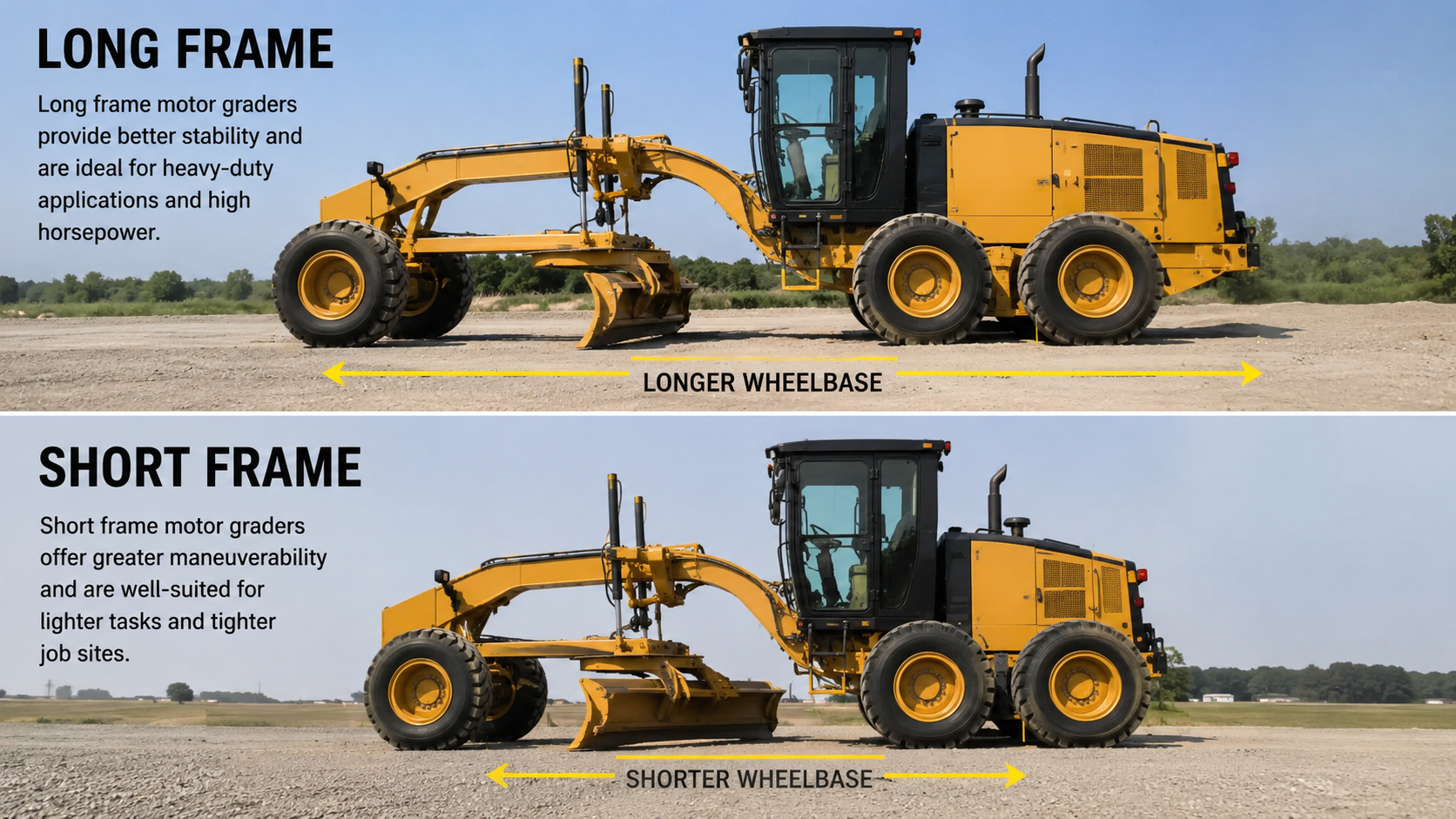
The third motor grader long frame vs short frame difference is weight distribution. A long frame distributes weight evenly across the axles. Furthermore, the motor grader long frame vs short frame setup affects stability on slopes; short frames can feel tippy on side slopes while long frames stay balanced.
Power increases have changed the motor grader long frame vs short frame landscape over the years. Modern power requires proper weight distribution, and long frames handle massive power more effectively.
Additionally, long frames put even pressure on all tires. Short frame machines wear out rear tires faster, reducing tire lifespan from 2,000 to 1,500 hours and driving up operational costs significantly.
The fourth motor grader long frame vs short frame difference is material rolling. The motor grader long frame vs short frame comparison highlights better material flow on long frames, maintaining a constant height for the blade.
When short frames allow the blade to rise and fall, operators must make extra passes. Therefore, the motor grader long frame vs short frame fuel difference can be 200 gallons per project because long frames complete the job with fewer passes.
More downforce on a long frame also cuts harder material, easily carving through compacted gravel that a short frame would just skate over.
The fifth motor grader long frame vs short frame difference is application suitability. Long frames are perfect for highway construction and mining, whereas short frames thrive in municipal maintenance.
The motor grader long frame vs short frame analysis also includes rigid frame and articulated frame types. If you need to equip your machine for ripping hard layers before grading, make sure to read our guide on motor grader ripper attachment uses.
| Application Type | Best Frame Length | Primary Benefit |
|---|---|---|
| Highway Construction | Long Frame | Quarter-inch precision over long runs |
| Urban Municipal Work | Short Frame | Tight 30-foot turning radius |
| Mining Haul Roads | Long Frame | Maximum stability and traction |
| Residential Subdivisions | Short Frame | Avoids excessive backing up |
If you are operating a short grader on small sites involving trenching and utilities, consider pairing your grader with the extremely capable Typhon Tyrant 17 Diesel Mini Excavator.
The motor grader long frame vs short frame decision affects the entire operation. Rent both lengths to test turning radius, stability, and surface quality firsthand on your own job sites.
Long Frame Pros
- Flawless subgrade finish
- Extended tire life
- Superior slope stability
Short Frame Cons
- Blade bounce on rough ground
- More passes needed
- Faster rear tire wear
Keep transport and initial cost in mind. A long frame costs $10,000 to $20,000 more and requires larger trailers, but the investment is fully justified by performance on heavy road projects.
Track your pass counts, fuel consumption, and surface smoothness. Let your data guide this frame length choice to ensure you make an investment in long-term efficiency.
Now make your decision. Choose the frame length that fits your work. Your grading quality will dramatically improve, your production will increase, and your operating costs will drop.
Ready to upgrade your heavy equipment fleet for maximum reliability and uptime? We provide top-quality road building machinery shipped directly within the USA. Get a free quote from our team today.
Get a Free Quote →Heavy equipment content powered by TyphonMachinery.com