☰ Table of Contents
Your motor grader controls define your daily operation. Electronic controls use joysticks and computers, while mechanical controls use levers and linkages. Each system has a distinct reliability record and fails in different ways.
This post compares motor grader electronic controls vs mechanical across 4 reliability tests. You will learn which system lasts longer, see which system costs less to repair, and understand which setup best fits your unique operation. The ultimate motor grader electronic controls vs mechanical showdown reveals exactly what you need to know.
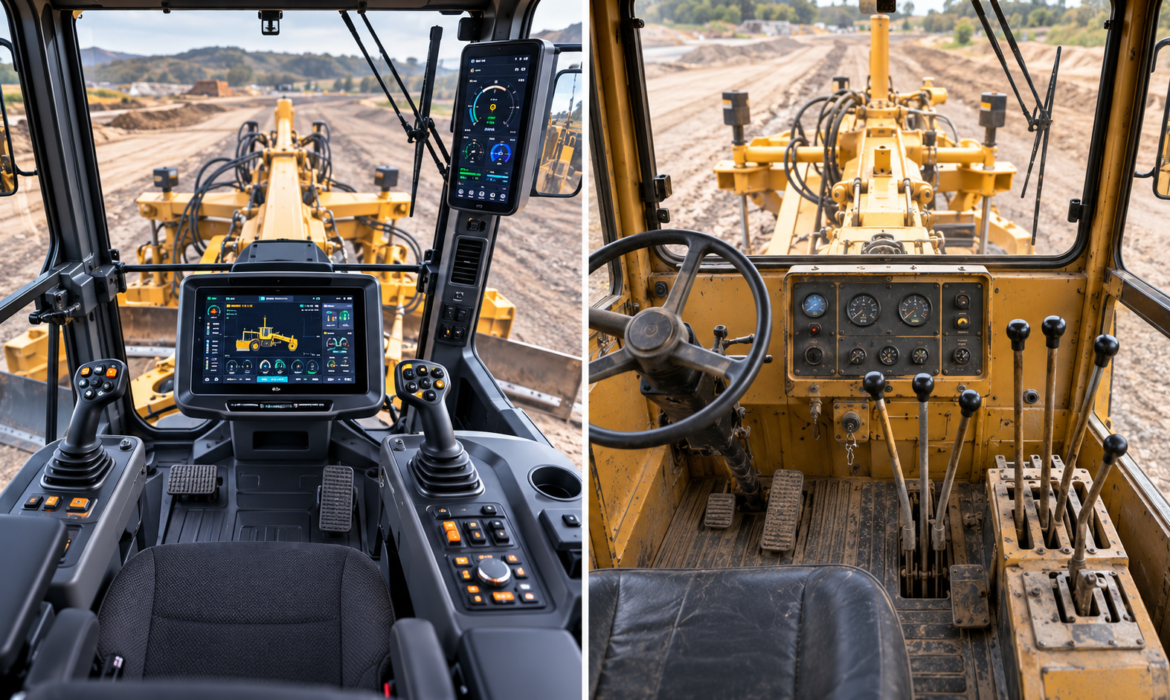
The motor grader electronic controls vs mechanical debate starts with the basic design. Electronic controls send electrical signals from the joystick to a control module. The module sends current to solenoids on the valve bank, moving the valve spools. Hydraulic oil flows to the cylinder, and the blade moves. This path has multiple complex components, and each component can fail.
Mechanical controls use rods, cables, and linkages. The lever connects directly to the valve spool. The operator moves the lever, the valve opens, and oil flows. This path has far fewer components, and each component is simple, visible, and accessible.
The first reliability test for motor grader electronic controls vs mechanical measures failure frequency. Electronic systems fail more often than mechanical systems because the components are more complex. A joystick has potentiometers, springs, and circuit boards. Each part can unexpectedly break or wear out.
Mechanical systems have rods and pins. Rods wear at connection points and develop play. These parts show visible wear before failure. The operator sees a loose lever and can schedule maintenance before a breakdown.
Field data from a fleet of 50 graders showed electronic controls failed 3 times more often. Electronic failures occurred at 1500-hour intervals on average, while mechanical failures occurred at 4500-hour intervals. The motor grader electronic controls vs mechanical reliability test clearly favored mechanical systems for frequency.
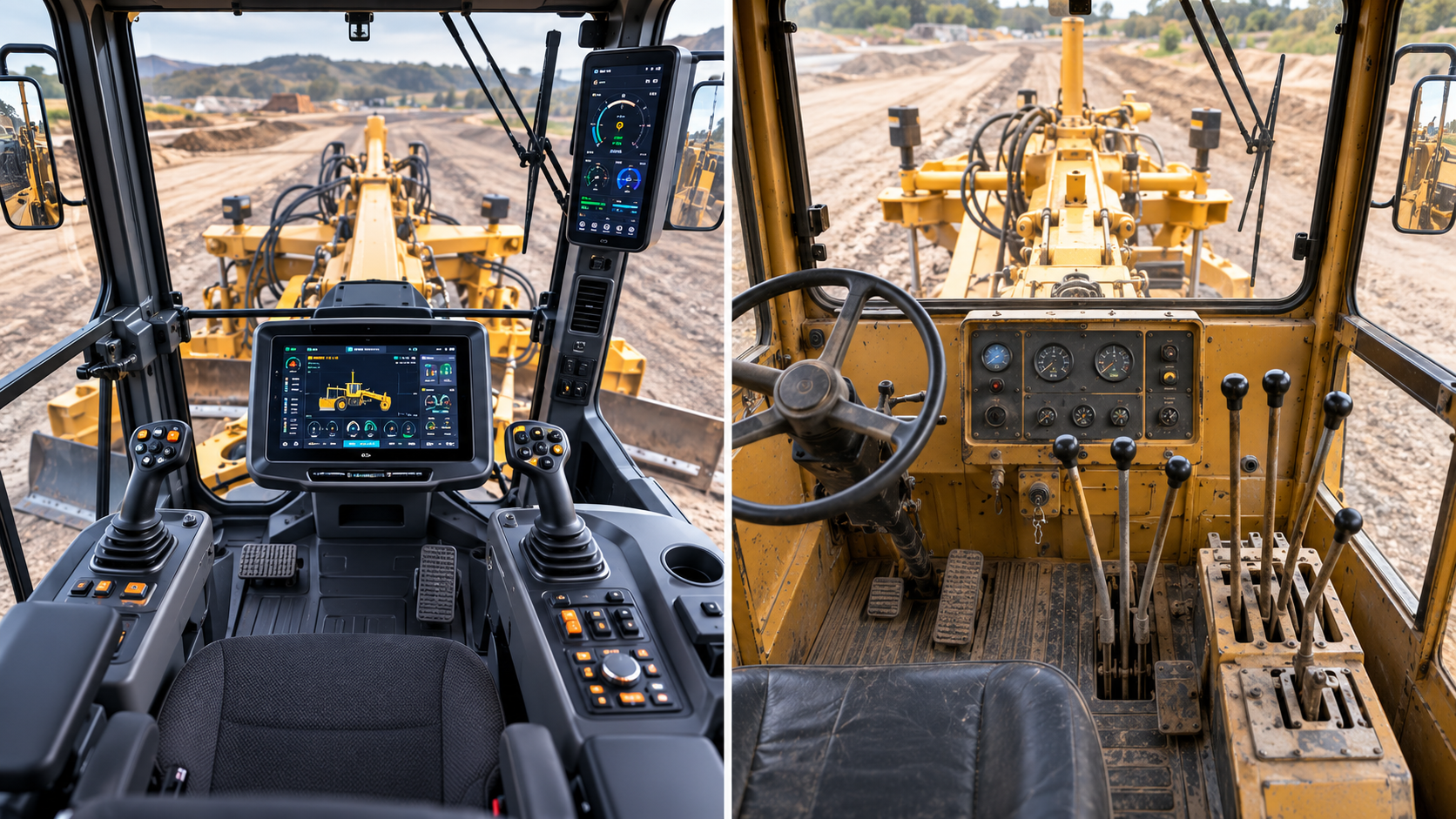
The second reliability test for motor grader electronic controls vs mechanical measures repair cost. Electronic repairs cost far more. A joystick replacement costs $800 to $1500, a control module costs $2000 to $4000, and a solenoid costs $200 to $500. A dealer technician also charges higher rates for electronic work.
Mechanical repairs cost much less. A rod replacement costs $50, a pin replacement is $20, and a linkage bushing costs $15. Labor rates are lower, and no special software is required.
A contractor tracked repair costs for 5 years. Electronic repairs averaged $4500 per machine per year, while mechanical repairs averaged just $1200. The motor grader electronic controls vs mechanical cost difference was significant; electronic systems cost nearly 4 times more to maintain.
The third reliability test for motor grader electronic controls vs mechanical measures downtime per failure. Electronic failures cause longer downtime. The machine stops working completely, and diagnosis requires a laptop and software to find the fault code.
Mechanical failures cause shorter downtime. The machine often keeps working with reduced function, allowing the operator to finish the shift. A broken rod or worn pin is visually obvious, allowing the mechanic to quickly swap the part.
A study of 100 repair events showed electronic failures caused 4.5 hours of average downtime, while mechanical failures caused just 1.2 hours. The motor grader electronic controls vs mechanical downtime test showed electronic systems cost more lost production, tallying up to $675 per event compared to just $180 for mechanical.
The fourth reliability test for motor grader electronic controls vs mechanical measures environmental tolerance. Electronic systems are highly sensitive to the environment. Moisture damages circuit boards, dust fills joystick bases, heat cooks modules, and vibration loosens connectors.
Mechanical systems tolerate the environment significantly better. Moisture does not affect rods, dust does not stop cables, and heat does not change mechanical operation.
A contractor in coastal Florida spent $15,000 per year on electronic repairs due to salt air corrosion. They switched to mechanical controls on new machines and ran for 3 years without a single control failure. The motor grader electronic controls vs mechanical environmental test showed mechanical systems win in harsh conditions.
Now let us examine the counter arguments. Electronic controls offer advantages beyond reliability, primarily in reducing operator fatigue. Joysticks require less effort than levers, enabling automatic functions like seamless grade control and follow steer.
The motor grader electronic controls vs mechanical debate includes major production gains. A less fatigued operator produces more, and an operator with grade control makes fewer passes. These production gains can often offset higher repair costs.
Understanding motor grader electronic controls vs mechanical diagnostic capabilities is also critical. A control module stores fault codes, helping mechanics find intermittent electrical problems faster than tracing a mechanical issue through complex linkages.
The motor grader electronic controls vs mechanical decision heavily depends on your specific operation. Consider these vital factors before purchasing:
- Climate: Wet, salty, or dusty environments strictly favor mechanical controls. Dry, moderate climates allow electronics to thrive.
- Operator Experience: Veterans often prefer the physical feel of mechanical linkages. New operators prefer the intuitive, short learning curve of joysticks.
- Repair Capability: Do you have diagnostic software and a dealer nearby? If not, mechanical controls are infinitely safer.
- Application: Finish grading heavily benefits from electronics. Heavy rough cutting favors mechanical durability.
When evaluating motor grader electronic controls vs mechanical, consider your machine age as well. Newer machines often default to electronic controls, while older units provide reliable mechanical options.
Analyzing motor grader electronic controls vs mechanical budget requirements is essential for long-term planning. Electronic controls cost more upfront, while mechanical systems cost significantly less to buy and maintain.
A fleet manager ran this calculation over a 10-year period. Total 10-year cost for an electronic system (including upfront premium, repairs, and downtime) was $80,250.
The total 10-year cost for the mechanical system was only $13,800.
The motor grader electronic controls vs mechanical cost difference over 10 years was $66,450. Mechanical controls were significantly cheaper, leading the manager to buy mechanical for his next 5 machines.
Electronic Pros
- Less operator fatigue
- Automated grade control
- Integrated diagnostics
Electronic Cons
- High repair costs
- Sensitive to dust/moisture
- Higher upfront price
The motor grader electronic controls vs mechanical reliability tests show clear differences overall. Mechanical systems fail less often, cost less to repair, and endure harsh environments.
If you are also comparing drivetrain layouts, you should read our deep dive on motor grader all wheel drive vs tandem configurations.
However, some contractors see the equation differently. A 10 percent production gain from electronic controls adds $150,000 in revenue over 10,000 hours, easily offsetting the higher maintenance costs.
Your choice in the motor grader electronic controls vs mechanical debate depends on your priorities. If reliability and low cost matter most, choose mechanical. If productivity and modern automation matter most, choose electronic.
Test both systems on your job sites. Rent an electronic control machine for a week, then a mechanical one. Track fuel consumption, production, and operator feedback to let the data guide your decision.
Listen to your operators. A machine with controls they hate will never produce well. The motor grader electronic controls vs mechanical debate will continue as technology advances and electronic systems become more reliable.
If your finishing projects require compacting after grading, follow your grader with the heavy-duty Typhon Fury 1.0 Mini Road Roller 1-Ton.
The motor grader electronic controls vs mechanical reliability tests show mechanical systems deliver lower cost over the machine life. Go evaluate your current fleet and decide which setup drives your profits higher.
▶ Control Systems Compared – Watch It Work
Ready to upgrade your heavy equipment fleet with the exact controls your operators need? We provide top-quality machinery shipped anywhere in the world. Get a free quote from our team today.
Get a Free Quote →Heavy equipment content powered by TyphonMachinery.com