☰ Table of Contents
Your equipment’s blade wears down with every single pass. It costs you money with every hour of operation. The wrong steel type doubles your operating expenses, while the right steel type saves thousands of dollars per year. You must monitor your motor grader blade cutting edge cost properly.
This post compares three steel types. You will learn the true rate for each option, match each steel type to your ground conditions, and see real wear data from field tests. Understanding your motor grader blade cutting edge cost is critical for budget management.
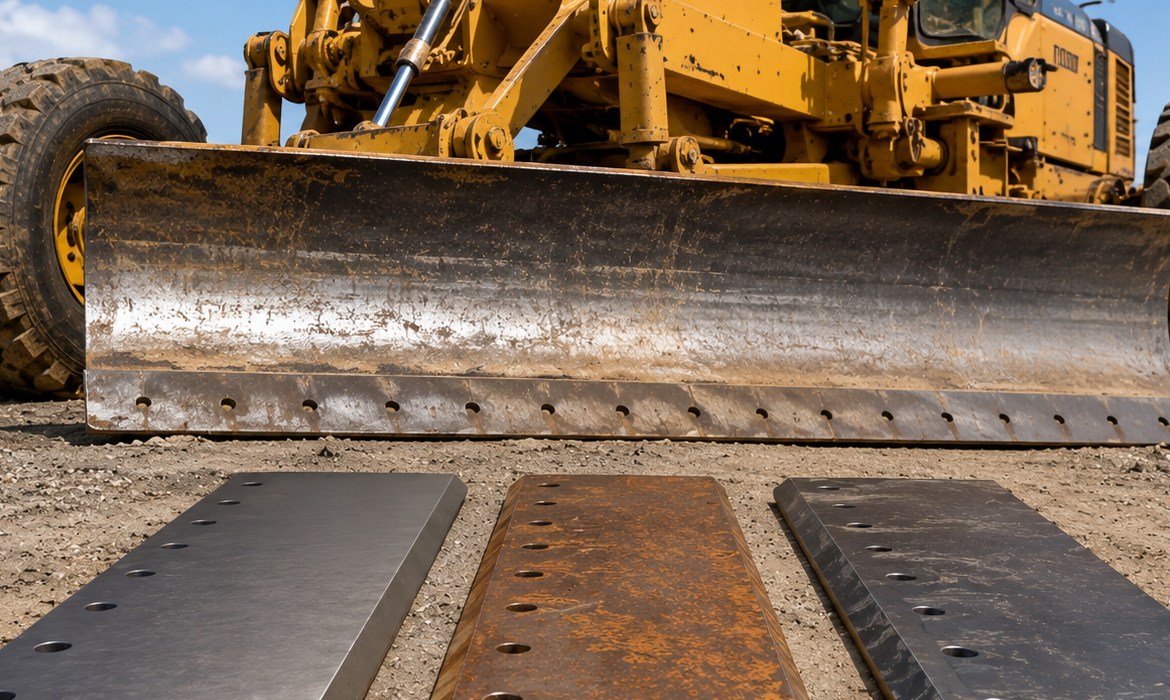
Reducing your motor grader blade cutting edge cost starts with material selection. Three common materials dominate the market. Carbon steel edges are the cheapest upfront. Hardened steel edges cost more but last longer. Carbide edges cost the most but deliver extreme wear life.
Each material has a specific use case. Each material changes your cost per hour significantly based on ground impact.
Let us start with carbon steel. These blades contain high carbon content for strength and are the most economical option for low-impact applications. The motor grader blade cutting edge cost for carbon steel seems attractive upfront. A standard 7-foot curved blade costs approximately 85 dollars.
However, calculating true motor grader blade cutting edge cost requires looking at wear life. Gravel wears carbon steel at a rate of one inch per 40 hours. Your carbon steel edge has a usable wear life of 5 inches total thickness, giving you 200 hours of life. The material cost is $0.42 per hour, but with $50 labor per replacement, your true expense is higher.
Carbon steel works best for snow removal and fine dirt grading. For these jobs, the motor grader blade cutting edge cost with carbon steel makes sense.
Hardened steel cutting edges go through a heat treatment process, resulting in harder material that resists wear. The upfront cost is $200 to $350 for a 7-foot curved blade.
The motor grader blade cutting edge cost for hardened steel changes the math. Hardened steel wears at half the rate of carbon steel. In gravel, it wears at one inch per 80 hours, giving you 400 hours of life.
By extending replacement intervals, the motor grader blade cutting edge cost decreases significantly when factoring downtime value. The motor grader blade cutting edge cost for hardened steel balances upfront price with good wear life.
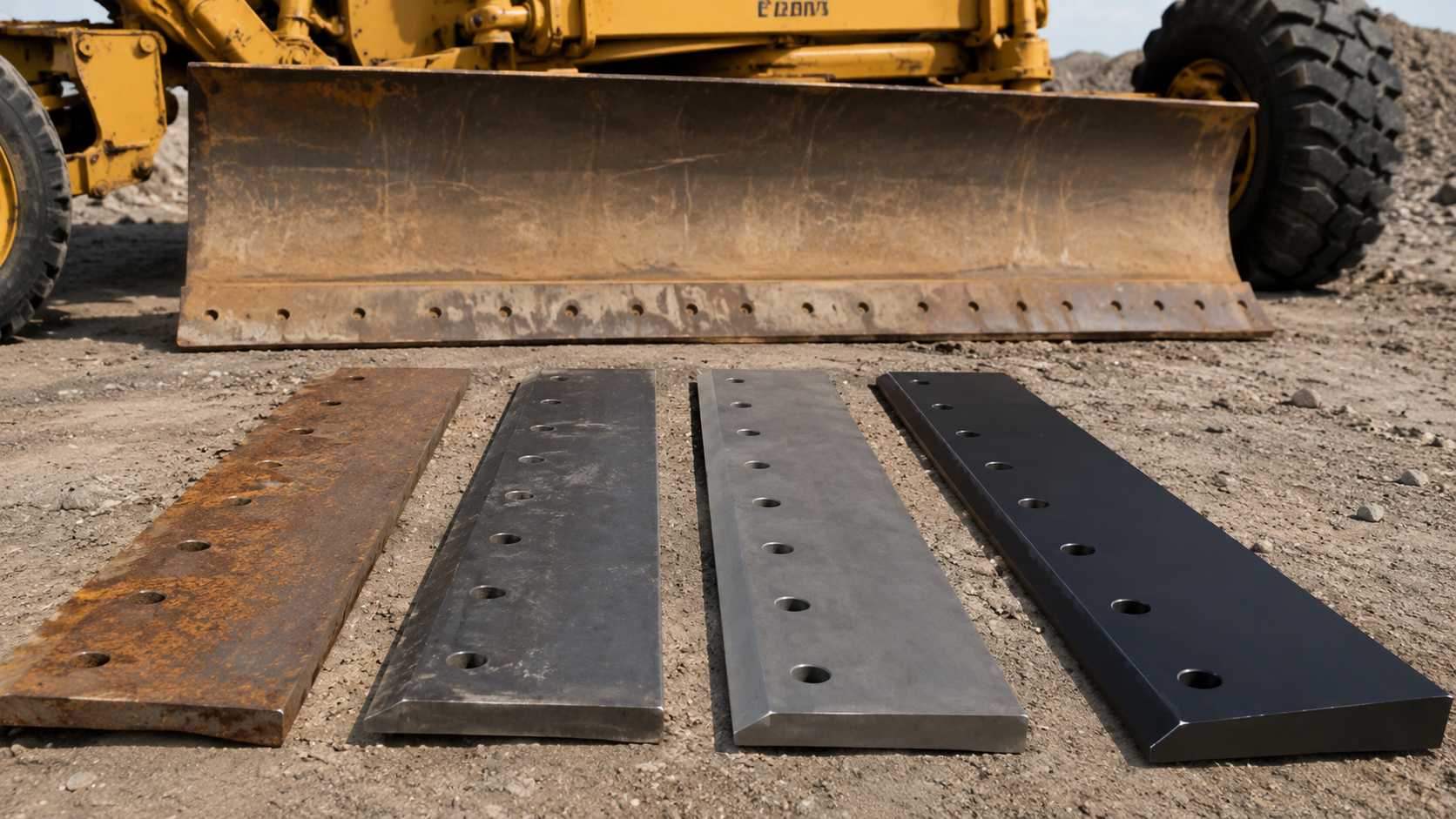
Carbide cutting edges embed tungsten carbide inserts into a steel base. They cost $600 to $900 upfront. The motor grader blade cutting edge cost for carbide changes everything. Carbide wears at one-tenth the rate of carbon steel in abrasive material (one inch per 400 hours).
With 2000 hours of life, carbide delivers the lowest motor grader blade cutting edge cost per hour in abrasive material. When factoring downtime, the true motor grader blade cutting edge cost of carbide becomes unbeatable.
| Steel Type | Upfront Price | Est. Gravel Life | Cost Per Hour (inc. Labor) |
|---|---|---|---|
| Carbon Steel | $85 | 200 Hours | $0.67 / hr |
| Hardened Steel | $275 | 400 Hours | $0.81 / hr |
| Carbide Inserts | $750 | 2000 Hours | $0.40 / hr |
However, the motor grader blade cutting edge cost for carbide includes the risk of chipping. Carbide edges are brittle. One good impact with a buried boulder can destroy a $750 edge in seconds, whereas carbon and hardened steel just deform and dull.
To optimize your motor grader blade cutting edge cost, match your blade material to ground conditions. Use carbon steel for snow, hardened steel for mixed conditions, and carbide for high abrasion gravel roads with no large rocks. If you’re outfitting a larger site fleet, exploring heavy-duty complementary machines like the Typhon Naga 4.0 Mini Excavator ensures all your earthmoving needs are met.
- An often overlooked factor in motor grader blade cutting edge cost is blade thickness. Buy the thickest blade your machine can handle.
- Choosing the right bolt pattern prevents modifications that inflate your operating expenses.
- Reusing hardware carefully keeps your overall maintenance budget under control.
- Proper blade angle directly impacts your final motor grader blade cutting edge cost. Keep wear uniform.
- Flipping the edge extends life and reduces your cost per hour.
- Keeping your blade clean prevents rust, positively affecting your long-term expenses.
- Tracking your wear rate allows you to predict future motor grader blade cutting edge cost.
- Ordering in bulk is a simple trick to lower your motor grader blade cutting edge cost.
Ultimately, the motor grader blade cutting edge cost comes down to your specific job site. Knowing your exact motor grader blade cutting edge cost saves thousands. Start with hardened steel as your baseline, measure the wear, and switch to carbide or carbon to compare. Ensure your operators are comfortable during these long shifts—investing in motor grader cab comfort features ensures high productivity while testing.
Now go inspect your current cutting edge and order the right steel type. Your motor grader blade cutting edge cost will drop, your uptime will increase, and your road quality will improve.
▶ Comparing Cutting Edges – Watch It Work
Ready to upgrade your heavy equipment fleet with the best materials and attachments? We provide top-quality machinery shipped anywhere in the world. Get a free quote from our team today.
Get a Free Quote →Heavy equipment content powered by TyphonMachinery.com