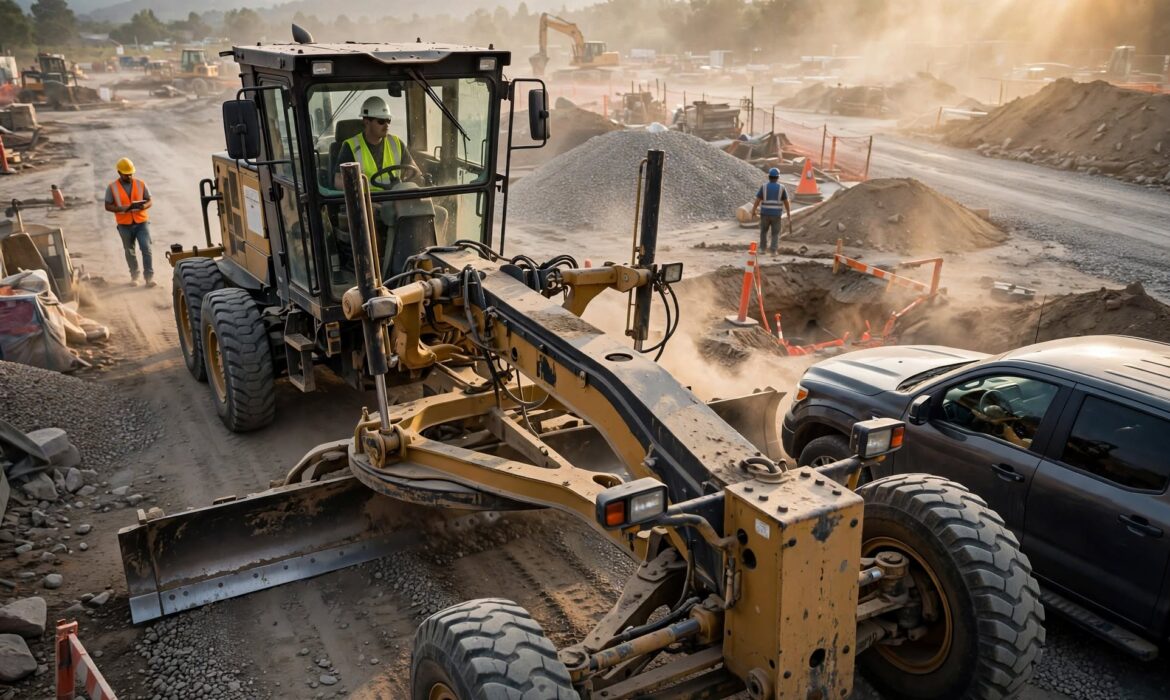
A motor grader operator sees only part of the jobsite. The cab pillars block the view. The engine hood blocks the view. The blade blocks the view. These motor grader cab visibility problems cause accidents. They cause injuries. They cause 30000 dollar repair bills. This post covers 6 blind spots from motor grader cab visibility problems. You will learn where each blind spot sits. You will learn how to check each one. You will learn how to reduce the risk. Apply these motor grader cab visibility problems solutions to your machine. Protect your crew. Protect your equipment.
Motor grader cab visibility problems start with the basic cab design. The operator sits behind the engine. The engine hood rises above the hood line. The blade sits under the cab. The rear frame extends behind the operator. Each of these components blocks part of the view. The motor grader cab visibility problems grow when operators do not adjust mirrors and cameras. They grow when ground crews stand in the wrong place.
Table of Contents
The Right Front Blind Spot
The first of the motor grader cab visibility problems sits at the right front corner. The engine hood blocks this area. The operator cannot see the ground within 10 feet of the right front tire. A ground worker standing in this zone disappears from view. The machine moves forward. The tire strikes the worker. The injury is severe.
Check this blind spot before every shift. Walk to the right front corner of the machine. Stand at the edge of the hood. Look at the operator seat. If the operator cannot see you, this is a confirmed blind spot. The motor grader cab visibility problems at the right front corner require a spotter. Ground crews must stay clear of this zone. The operator must use the front mirror to check this area before moving.
One construction site had a near miss in this zone. A laborer walked past the right front tire. The operator did not see the laborer. The laborer tripped on a hose. The machine stopped 2 feet away. The motor grader cab visibility problems nearly caused a fatal accident. The site implemented a rule after this event. No worker walks within 15 feet of the right front corner without eye contact from the operator.
The Left Front Blind Spot
The second of the motor grader cab visibility problems sits at the left front corner. The engine hood blocks this area too. The left front blind spot is smaller than the right side on most models. The exhaust stack and air cleaner add blockage on some machines. The operator cannot see the ground within 6 feet of the left front tire.
Check this blind spot the same way. Walk to the left front corner. Stand at the hood edge. Look at the operator. If the operator cannot see you, the blind spot exists. The motor grader cab visibility problems at the left front corner require mirror adjustment. The left mirror angles down toward the front tire. The mirror shows this zone. The operator checks the mirror before moving.
A road crew had a close call in this zone. A surveyor placed a stake near the left front tire. The operator moved forward. The blade hit the stake. The stake flew into the air. The surveyor stood 5 feet away. The motor grader cab visibility problems created this hazard. The crew now places stakes outside the 10 foot zone around the machine.
The Directly Behind Blind Spot
The third of the motor grader cab visibility problems sits directly behind the machine. The rear frame and ripper block this area. The operator cannot see the ground within 20 feet behind the rear tires. A worker standing behind the machine disappears from view. The machine reverses. The worker gets struck.
Check this blind spot before reversing. Walk 20 feet behind the machine. Stand in the center. Look at the rear window. If the operator cannot see you, the blind spot is confirmed. The motor grader cab visibility problems behind the machine require a backup camera. A camera mounted on the rear frame shows this zone. The operator checks the camera monitor before reversing. A backup alarm warns workers in the area.
One site had a reverse accident in this zone. A laborer carried tools behind the grader. The operator reversed without checking the camera. The rear tire struck the laborer’s leg. The injury required surgery. The motor grader cab visibility problems caused this accident. The site installed a second camera after the incident.
The Right Rear Blind Spot
The fourth of the motor grader cab visibility problems sits at the right rear corner. The rear frame and tandem tires block this area. The operator cannot see the ground within 12 feet of the right rear tire. A worker walking along the right side disappears when passing this zone.
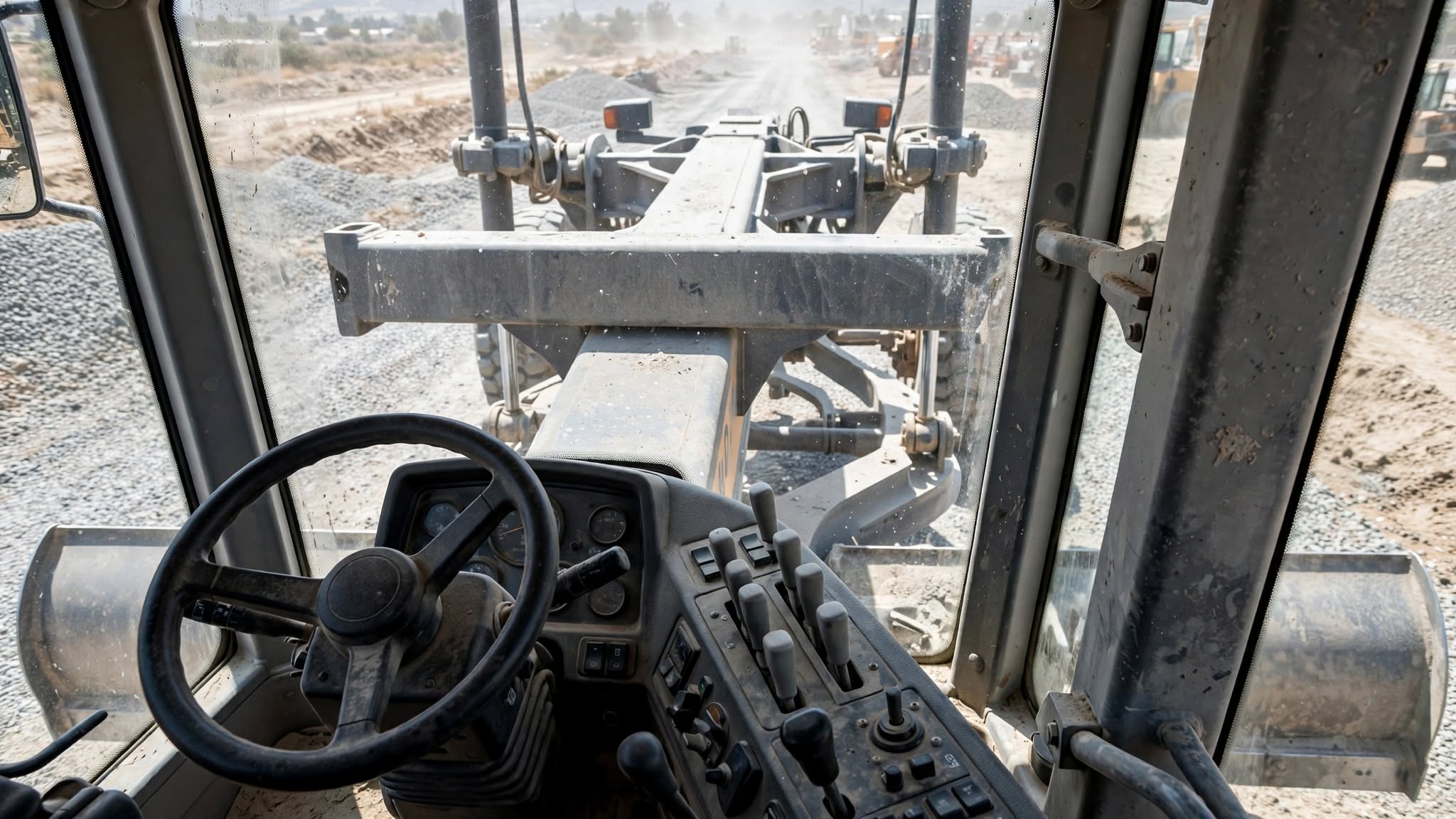
Check this blind spot before turning right. Walk to the right rear corner. Stand beside the tandem. Look at the right mirror. If the operator cannot see you, the blind spot exists. The motor grader cab visibility problems at the right rear corner require a convex mirror. The convex mirror widens the view. It shows the area beside the tandem. The operator checks this mirror before turning.
A paving crew had a near miss in this zone. A roller operator walked beside the grader. The grader turned right. The rear tire came within 1 foot of the roller operator. The motor grader cab visibility problems created this near miss. The crew now uses radios. Ground workers call the operator before entering this zone.
The Left Rear Blind Spot
The fifth of the motor grader cab visibility problems sits at the left rear corner. The rear frame and tandem tires block this area. The operator cannot see the ground within 12 feet of the left rear tire. This blind spot matches the right rear zone. It creates the same risks.
Check this blind spot before turning left. Walk to the left rear corner. Stand beside the tandem. Look at the left mirror. If the operator cannot see you, the blind spot exists. The motor grader cab visibility problems at the left rear corner require the same convex mirror setup. The operator checks the left mirror before turning left.
A grading crew had a close call in this zone. A dump truck driver walked toward the grader. The grader turned left. The driver stepped back. The truck driver avoided injury. The motor grader cab visibility problems caused this near miss. The crew now requires high visibility vests. The vests help operators see workers in the mirrors.
The Blade Shadow Blind Spot
The sixth of the motor grader cab visibility problems sits under the blade. The blade casts a shadow. The shadow hides the ground directly under the moldboard. The operator cannot see small objects under the blade. Stakes, tools, and debris disappear in this zone. The blade strikes these objects. The objects fly out from under the machine. Workers nearby get hit.
Check this blind spot before grading. Walk 5 feet in front of the blade. Place a small object on the ground. Look at the operator. If the operator cannot see the object, the blind spot exists. The motor grader cab visibility problems under the blade require a front camera. The camera mounts on the front frame. It shows the ground ahead of the blade. The operator checks this camera before lowering the blade.
One site had a flying object accident. A steel stake sat under the blade. The operator lowered the blade. The stake shot out sideways. The stake hit a worker in the leg. The injury required stitches. The motor grader cab visibility problems caused this accident. The site now requires a walk through before grading begins.
Daily Routine & Practical Solutions
Now let us apply these visibility solutions to the daily routine. Start with a walk around inspection. Walk to each of the 6 blind spot zones. Stand in each zone. Check whether the operator can see you from the seat. Note the zones where visibility fails. Adjust mirrors and cameras to cover those zones.
Set up the mirrors correctly for these blind spots. The left mirror angles down and out. It shows the left rear tire and the area beside the tandem. The right mirror angles down and out. It shows the right rear tire and the area beside the tandem. The front mirrors angle down toward the front tires. They show the zones beside the engine hood.
Add cameras for the worst visibility issues. A rear camera covers the directly behind zone. A front camera covers the blade shadow zone. Side cameras cover the right rear and left rear zones. Camera monitors mount in the cab. The operator sees all zones without turning the head. Train ground crews on these risks. Teach workers where the blind spots sit. Teach workers to stay out of those zones.
The True Cost of Accidents
A 30,000 dollar accident includes machine repair. It includes medical bills. It includes lost work time. It includes insurance claims. It includes legal fees.
These blind spot accidents cost far more than the visible repair bill. Prevention costs a few hundred dollars in mirrors and cameras. Prevention costs a few hours of training. The return on prevention is enormous. When one contractor implemented this safety program, accidents dropped from 4 per year to zero, and insurance premiums dropped by 15 percent.
The blind spots above cause real accidents. Each blind spot has a specific location. Each blind spot has a specific solution. The right front zone needs mirror coverage. The left front zone needs mirror coverage. The rear zone needs a camera. The right rear zone needs a convex mirror. The left rear zone needs a convex mirror. The blade zone needs a front camera.
Check these visibility problems on your machine. Walk to each zone. Test the visibility. Adjust the mirrors. Install the cameras. Train the crew. The effort prevents 30,000 dollar accidents. The effort prevents injuries. The effort saves lives.
Now check the visibility on your grader. Sit in the seat. Look at each zone. Note what you cannot see. Adjust the mirrors. Install cameras. Train the crew. The blind spots will shrink. The accidents will stop.