☰ Table of Contents
Your motor grader faces daily abuse. Dust enters every opening. Rocks hit the undercarriage. Heavy loads stress every component. These motor grader maintenance challenges cost you money when you ignore them. A 5000-dollar breakdown starts with a simple problem. A loose bolt. A low fluid level. A worn hose.
This post covers 8 simple checks for motor grader maintenance challenges. You will learn specific inspection points. You will learn the warning signs. You will learn the prevention steps. Apply these motor grader maintenance challenges checks to your machine. Stop breakdowns before they stop you.
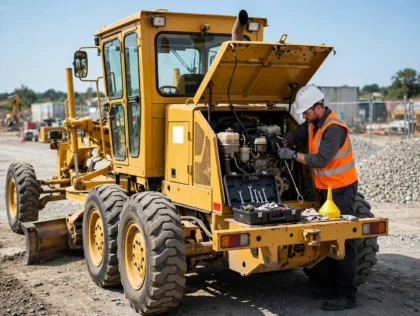
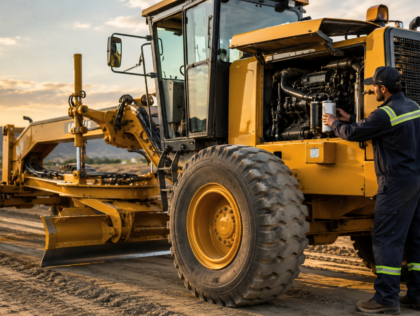
Overcoming motor grader maintenance challenges starts with the daily walkaround. Most operators rush this step. They start the engine and go to work. They miss the early warning signs. The early warning signs become 5000 dollar repairs. The motor grader maintenance challenges checklist begins with a slow walk around the machine. Take 10 minutes. Look at every component. Touch every component. Listen to every component.
The first check for motor grader maintenance challenges is fluid levels. Low fluid kills components fast. Low engine oil seizes the engine. Low hydraulic oil burns the pump. Low transmission oil destroys the transmission. Low coolant overheats the engine. The motor grader maintenance challenges fluid check takes 2 minutes.
Check the engine oil dipstick. Pull it out. Wipe it clean. Insert it fully. Pull it again. The oil should read between the add and full marks. Add oil if needed. Check the hydraulic sight gauge. The oil should reach the fill line. Add oil if low. Check the transmission dipstick. The level should be in the crosshatch area. Check the coolant overflow bottle. The level should be between hot and cold marks.
A contractor lost an engine due to low oil. The operator skipped the daily oil check. The engine ran low on oil for 3 hours. The bearings seized. The repair cost 25000 dollars. A 2 minute oil check would have prevented this motor grader maintenance challenges failure. The operator would have added oil. The engine would have kept running. The 25000 dollar repair never would have happened.
The second check for motor grader maintenance challenges is tire condition. Tires cost 2000 to 5000 dollars each. A blowout stops your machine. A slow leak ruins the tire carcass. The motor grader maintenance challenges tire check takes 2 minutes.
Walk around each tire. Look for cuts in the sidewall. Look for embedded objects in the tread. Look for uneven wear patterns. Uneven wear indicates misalignment or low pressure. Check the tire pressure with a gauge. Match the pressure to the sidewall specification. Front tires run at different pressures than rear tires. Add air if needed.
One operator noticed a small cut on a rear tire. The cut was 2 inches long. He ignored it. The cut grew to 6 inches. The tire blew out at full speed. The tire destroyed the fender. The repair cost 4800 dollars for the tire and 1200 dollars for the fender. The motor grader maintenance challenges tire check would have caught the small cut. The operator could have patched the tire or replaced it at low cost.
The third check for motor grader maintenance challenges is the cutting edge. A dull cutting edge forces the machine to work harder. Harder work overheats the hydraulics. Harder work wears the circle and drawbar. Harder work burns more fuel. The motor grader maintenance challenges cutting edge check takes 1 minute.
Measure the remaining thickness at the bolt holes. Replace the edge when thickness drops below 1 inch. Check the bolt torque. Loose bolts break. Broken bolts damage the moldboard.
A fleet manager noticed higher fuel consumption on one grader. The machine burned 7 gallons per hour. The other graders burned 5.5 gallons per hour. The motor grader maintenance challenges cutting edge check revealed a worn edge. The edge was down to 0.5 inches. The operator replaced the edge. Fuel consumption dropped to 5.5 gallons per hour. The 1.5 gallon per hour saving over 2000 hours saved 3000 gallons of fuel. At 4 dollars per gallon, that is 12000 dollars saved.
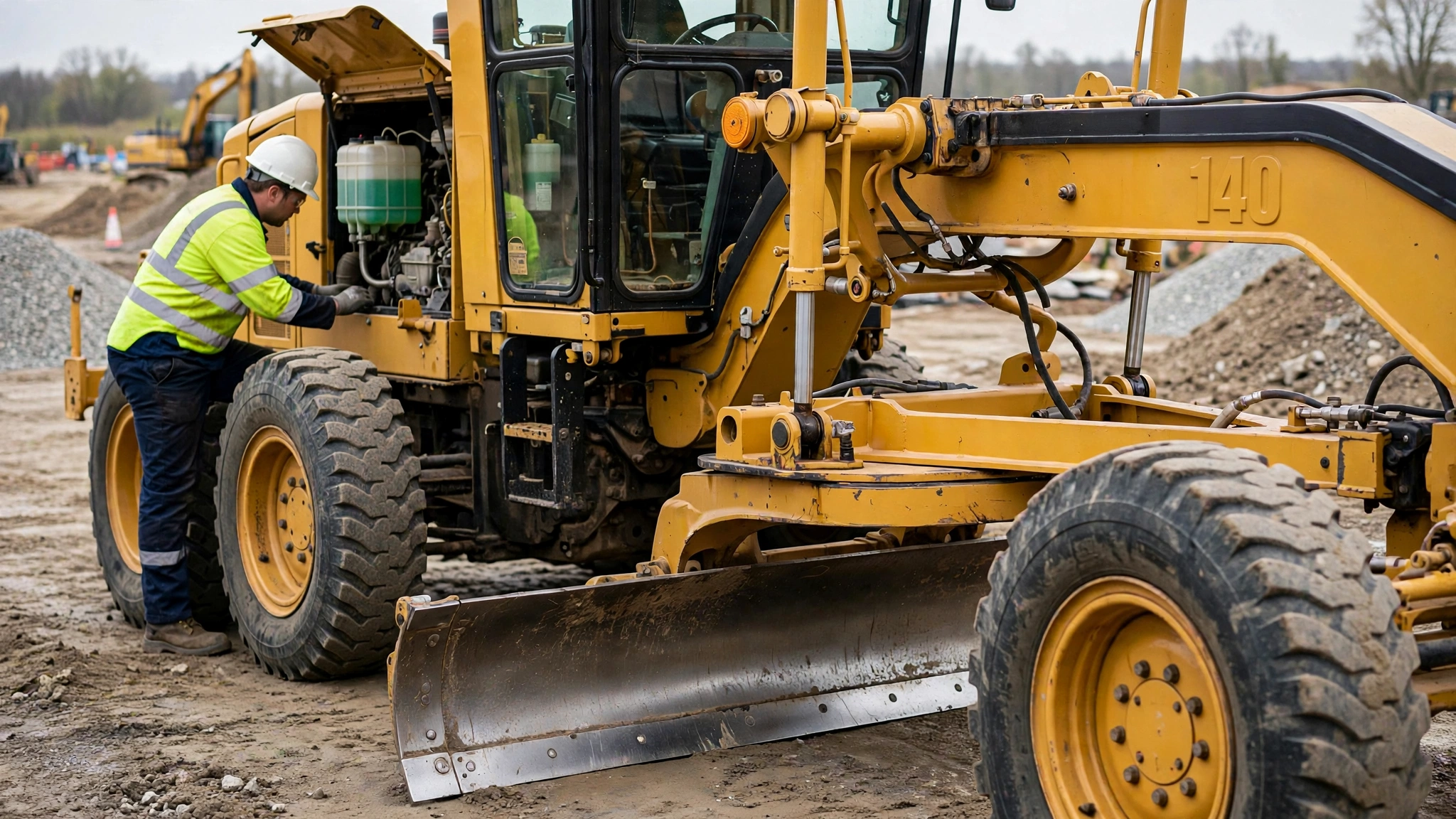
The fourth check for motor grader maintenance challenges is the circle wear strips. The circle supports the blade. The wear strips take the load. Worn strips allow the circle to drop. Dropping increases friction. Increased friction wears the circle drive gear. The motor grader maintenance challenges circle check takes 2 minutes.
Push the blade side to side with your hands. Movement of more than 1 inch indicates worn strips. Check the shim pack on your model. Add shims to take up the wear. Measure the strip thickness with a caliper. Replace strips when thickness drops below the wear limit.
A grader with worn wear strips developed circle gear wear. The gear teeth chipped. The circle rotation became jerky. The motor grader maintenance challenges check would have caught the worn strips. The circle gear replacement cost 4500 dollars. The wear strip replacement costs 300 dollars. The simple check saved 4200 dollars.
The fifth check for motor grader maintenance challenges is the hydraulic hoses. Hoses carry high pressure oil. A hose failure sprays hot oil everywhere. The oil can catch fire. The machine stops working. The motor grader maintenance challenges hose check takes 3 minutes.
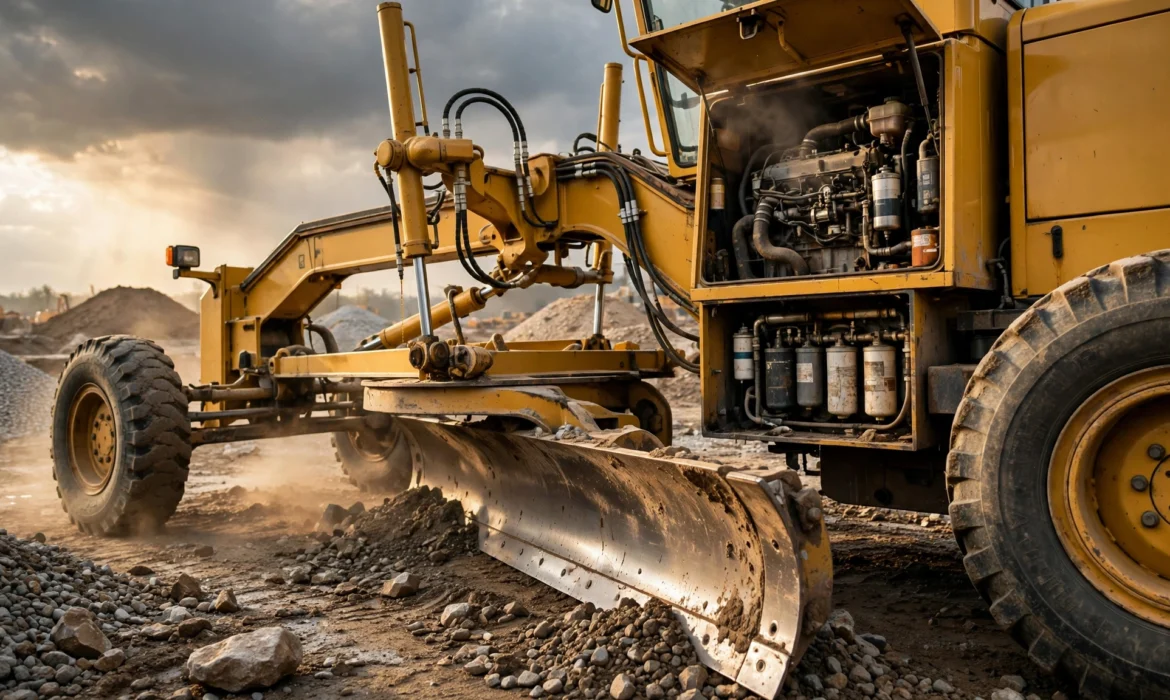
Look at every hose on the machine. Check for cracks in the outer cover. Check for bulges in the hose. Check for chafing against other components. Check the hose fittings for leaks. Replace hoses with cracks or bulges. Reroute hoses that rub against sharp edges.
A hydraulic hose burst on a grading job. The operator lost blade control. The blade dropped to the ground. The hot oil sprayed on the exhaust manifold. The oil ignited. The fire damaged the wiring harness and cab. The repair cost 18000 dollars. The hose was rubbing against a metal bracket. A simple reroute and new hose would have cost 150 dollars.
The sixth check for motor grader maintenance challenges is the air filter. Dust destroys engines. The air filter stops the dust. A clogged air filter restricts airflow. Restricted airflow causes power loss. Restricted airflow increases fuel consumption.
The air filter check takes 1 minute. Open the air filter housing. Look at the filter element. Tap the element gently to remove loose dust. Hold a light behind the element. If you see light through the paper, the filter is clean. If you see no light, replace the element. Check the dust indicator on the housing. Replace the filter when the indicator shows red.
A grader operator complained of power loss. The machine could not climb a slight grade. The motor grader maintenance challenges air filter check found a completely clogged filter. The filter had not been changed in 1500 hours. The operator replaced the filter. The power returned immediately. The clogged filter had also increased fuel consumption by 10 percent for 500 hours. The extra fuel cost 800 dollars.
The seventh check focuses on the drive belts. Belts drive the alternator, water pump, and fan. A broken belt stops the cooling system. The engine overheats. A broken belt stops the charging system. The battery drains.
The belt check takes 1 minute. Push the belt with your thumb. The deflection should be 0.5 to 1 inch at the midpoint. Check the belt for cracks on the ribbed side. Look for glazing on the belt surface. Replace belts with cracks or glazing. Replace belts with excessive deflection.
A belt broke on a grader working 2 miles from the shop. The operator did not notice the temperature gauge. The engine overheated. The cylinder head cracked. The repair cost 8000 dollars. A 50 dollar belt would have prevented the 8000 dollar repair.
The eighth check focuses on grease points. Grease lubricates the pivot points. Without grease, pins wear. Worn pins cause play. Play causes poor grade control. Play causes component failure. The grease check takes 5 minutes.
Locate all grease fittings on the machine. The circle has multiple fittings. The drawbar has fittings. The articulation joint has fittings. The blade lift cylinders have fittings. Attach the grease gun. Pump grease until it pushes out of the joint. Wipe away the old grease. Record the grease schedule in your log.
A contractor skipped grease on the articulation joint for 500 hours. The joint developed play. The machine wandered on the road. The operator could not hold a straight line. The articulation joint replacement cost 6000 dollars. The grease cost 5 dollars. The simple check would have saved 6000 dollars. To ensure proper blade handling, learn more about motor grader moldboard pitch angles.
Now let us apply these checks to your daily routine. Start with the fluid level check every morning. Do not skip this step. Low fluid is the number one cause of catastrophic failure. Make it a habit. Check the oil, hydraulic, transmission, and coolant levels. Record the levels in a log. Notice trends over time. A gradual drop in oil level indicates a leak. A sudden drop indicates a major failure coming.
Add the tire check to your weekly routine. Inspect each tire carefully. Look for cuts, embedded objects, and uneven wear. Check pressures with a gauge. Record pressures in your log. Uneven pressure from week to week indicates a slow leak. Fix the leak before the tire fails.
Add the cutting edge check to your weekly routine. Measure the remaining thickness. Record the measurement. Track the wear rate. A sudden increase in wear rate indicates a change in material or operator technique. Address the change before the edge wears out.
Add the circle check to your monthly routine. Push the blade side to side. Measure the movement. Adjust shims as needed. Replace wear strips when they reach the wear limit.
Add the hose check to your monthly routine. Inspect every hose on the machine. Look for cracks, bulges, and chafing. Replace damaged hoses immediately.
Add the air filter check to your weekly routine in dusty conditions. Check the filter every 2 weeks in clean conditions. Replace the filter when the dust indicator shows red.
Add the belt check to your monthly routine. Check belt deflection and condition. Replace belts showing cracks or glazing.
Add the grease schedule to your daily or weekly routine depending on the fitting location. Grease the circle and drawbar daily. Grease the articulation joint daily. Grease the blade lift cylinders weekly. Use the correct grease type for your climate. For heavy asphalt or compaction duties complementing your grading, consider using the Typhon Fury 1.5-Ton Mini Road Roller.
The motor grader maintenance challenges checklist above will save you money. Each check takes 1 to 5 minutes. The total daily time is 10 minutes. The total weekly time is 20 minutes. The total monthly time is 1 hour. This small investment of time prevents 5000 dollar breakdowns.
A fleet of 12 graders implemented this checklist. Breakdowns dropped by 60 percent in the first year. Repair costs dropped from 120000 dollars to 48000 dollars. The fleet saved 72000 dollars. All from 10 minutes of daily checks.
Your machine’s upkeep is manageable. The 8 checks are simple. The checks do not require special tools. The checks do not require advanced training. Any operator can perform these checks. Any mechanic can supervise the process.
Start your program today. Print this checklist. Laminate it. Place it in each cab. Train your operators on each check. Review the checklists weekly. Praise operators who complete all checks. Correct operators who skip checks.
The problems listed above are real problems. They happen on every brand and model. They happen in every climate and application. The prevention steps work everywhere.
Now go check your motor grader. Look at the fluid levels. Look at the tires. Look at the cutting edge. Look at the circle. Look at the hoses. Look at the air filter. Look at the belts. Look at the grease points. Stop the 5000 dollar breakdown before it starts.
Ready to upgrade your heavy equipment fleet for maximum reliability and uptime? We provide top-quality road building machinery shipped anywhere in the world. Get a free quote from our team today.
Get a Free Quote →Heavy equipment content powered by TyphonMachinery.com