
☰ Table of Contents
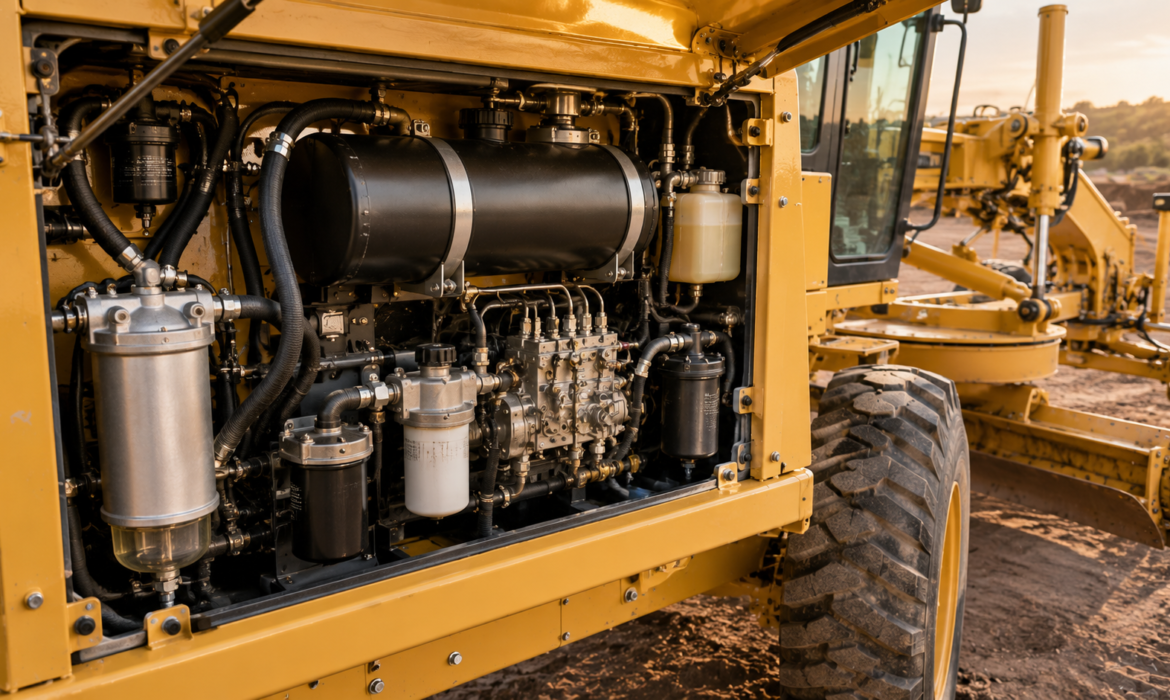
Your motor grader fuel system delivers power to the engine. It pushes diesel from the tank to the injectors, pressurizing fuel for combustion. When the motor grader fuel system troubleshooting starts, your machine loses power, stalls, smokes, or refuses to start.
This post covers 5 common injector and pump issues in the fuel setup. You will learn the symptoms, causes, and fixes. Apply this motor grader fuel system troubleshooting guide to your machine to reduce downtime and save massive repair costs.
Effective motor grader fuel system troubleshooting begins with the fuel tank. Dirty fuel causes most problems. Water enters through the tank cap, debris falls into the tank during refueling, and algae grows in diesel fuel.
The fuel tank collects sludge over time, and all these contaminants damage the injectors and pump. The fuel system maintenance routine must start at the tank to avoid catastrophic engine failures down the line.
The first common issue is contaminated fuel, which causes injector wear, pump scoring, and filter plugging. The motor grader fuel system troubleshooting for contamination starts with a fuel sample. Draw fuel from the tank bottom and look for water droplets, dark particles, or a cloudy appearance.
Water in diesel causes injector tip erosion. High-pressure water jets blast the injector holes, altering the spray pattern and causing incomplete combustion. The diagnostic process for water contamination requires water separator maintenance. Drain the separator daily until clean diesel appears.
The motor grader fuel system troubleshooting for debris requires strict filter replacement. Use genuine filters, as aftermarket filters may allow small particles through that jam plungers.
One contractor found power loss across 3 graders in a week. The motor grader fuel system troubleshooting revealed algae growth in the bulk storage tank. The repair cost $12,000, which a simple biocide treatment could have prevented.
The second common issue is a worn injection pump, causing low pressure and lost engine power. The motor grader fuel system troubleshooting for pump wear starts with pressure testing. Install a gauge on the pump outlet and compare it to manufacturer specifications.
Low pressure indicates scored plungers, excessive barrel clearance, or leaking delivery valves. The repair process for pump wear requires removal and bench testing by a diesel injection shop.
Pump wear occurs faster with contaminated fuel. The motor grader fuel system troubleshooting must include stringent fuel quality management. A mining fleet saved $13,500 per machine simply by draining water separators daily, saving 3,000 hours of pump life per grader.
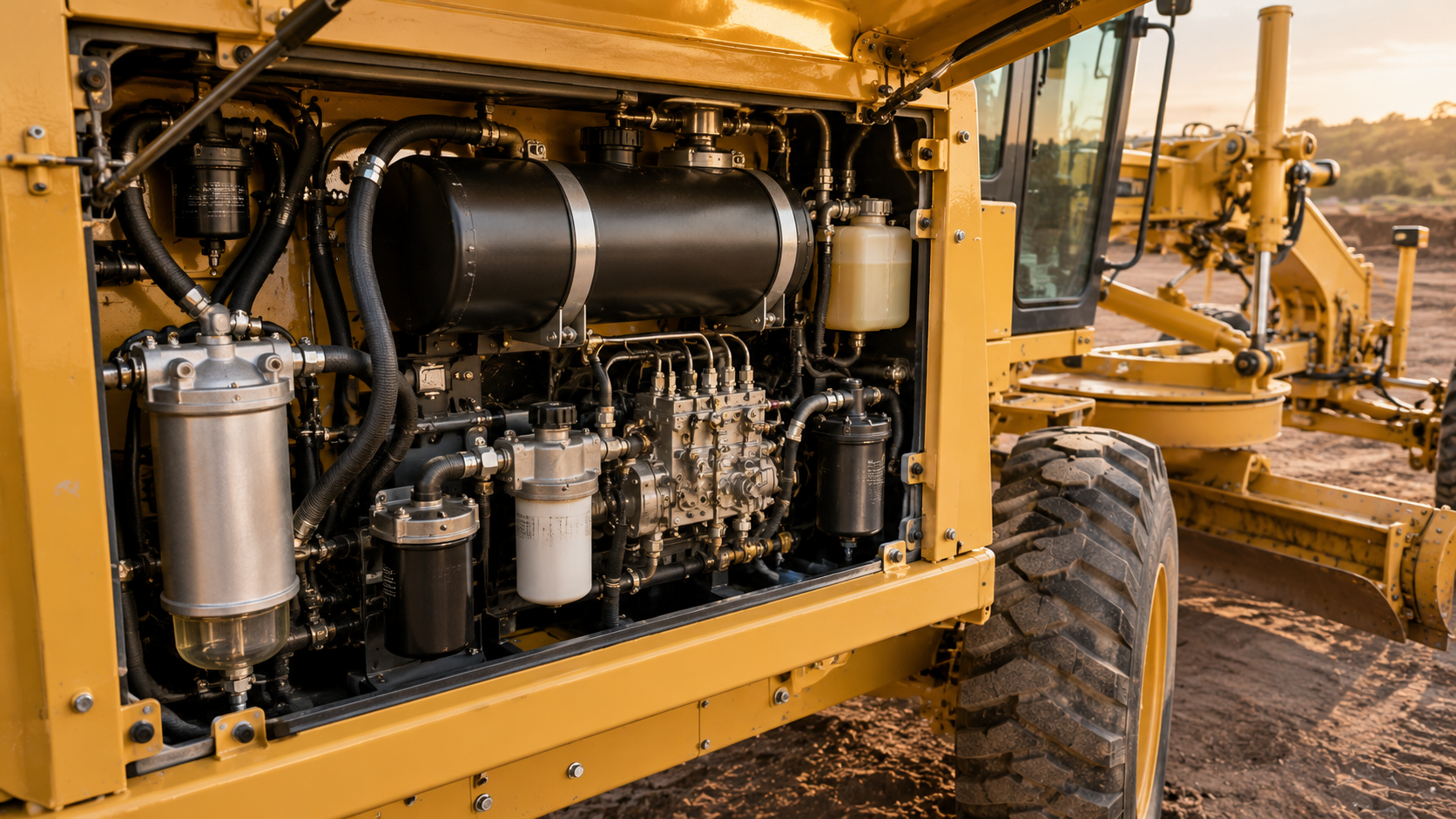
The third common issue is faulty injectors. Holes get clogged, nozzles crack from heat, and springs lose tension. The motor grader fuel system troubleshooting for injector issues starts with the return line test. Excessive return flow means the injector leaks fuel back to the tank instead of spraying it into the cylinder.
The injector testing procedure requires pressurizing the nozzle to observe the spray pattern. A worn injector produces a stream or drip, causing black smoke and high fuel consumption. The motor grader fuel system troubleshooting for injectors should happen every 2,000 hours.
This targeted maintenance strategy saved one contractor $1,200 when they only had to replace 2 worn injectors instead of an entire $3,600 set.
The fourth common issue is air entering through loose connections, cracked lines, or failed seals. Air prevents proper injector operation. The motor grader fuel system troubleshooting for air starts with a visual inspection for drips and wet spots.
Air causes hard starting, rough idle, and stalling. The bleed procedure for air requires loosening the bleeder screw and pumping the manual primer lever until clean fuel flows without bubbles. The motor grader fuel system troubleshooting for air includes checking all fuel line connections and using protective sleeving on chafing lines.
One operator experienced 30-second crank times every morning. The motor grader fuel system troubleshooting found a hairline crack on the underside of a suction line. Replacing it stopped the hard starts instantly.
The fifth issue is incorrect injection timing. Early timing causes knocking, and late timing causes black smoke and power loss. The motor grader fuel system troubleshooting for timing requires checking the timing marks on the pump and engine.
Setting the injection timing requires a dial indicator to measure the exact pump plunger position relative to top dead center. The motor grader fuel system troubleshooting for timing is best done by a qualified technician, as early timing damages pistons and late timing overheats exhausts.
A fleet had glowing red exhaust manifolds. The diagnostic check found injection timing 2 degrees late. Fixing it dropped exhaust temps by 100 degrees, saving 3 engines from a $30,000 failure.
Now let us put together a motor grader fuel system troubleshooting routine. Start every week with a visual tank inspection and drain the water separator every single shift.
- Change primary filters every 250 hours.
- Change secondary filters every 500 hours.
- Take regular fuel samples for lab analysis.
Lab tests check for water, dirt, and wear metals. The motor grader fuel system troubleshooting catches problems early, preventing high-cost component failure.
Proactive Care
- Daily separator drains
- Quarterly biocide treatments
- Clean bulk storage tanks
Neglect Costs
- $3,600 injector sets
- $4,500 injection pumps
- Massive project downtime
The motor grader fuel system troubleshooting process is not complicated, but it requires strict attention to detail and regular inspections. In comparison, operators often wonder if they should rely on complex electronic systems; learning the differences between motor grader electronic controls vs mechanical can help you decide which setup minimizes your diagnostic headaches.
One contractor implemented a strict motor grader fuel system troubleshooting program. Their repair budget dropped from $45,000 per year to just $7,000 per year.
The motor grader fuel system troubleshooting guide above will help you maintain your precision components. Start with simple fixes—change filters, check for air leaks—before moving to advanced diagnostics.
The diagnostic knowledge in this post comes from real field experience across top brands. Clean fuel, regular maintenance, and timely repairs are non-negotiable. If you need a reliable finish after a day of grading, follow up with the heavy-duty Typhon Fury 1.5 Ton Vibratory Compactor.
Go inspect your water separator and fuel lines today. Start your motor grader fuel system troubleshooting today, and the thousands of dollars you save will be your own.
▶ Fuel System Diagnostics – Watch It Work
Ready to upgrade your fleet with reliable, heavy-duty machinery? We provide top-quality road building equipment shipped anywhere in the world. Get a free quote from our team today.
Get a Free Quote →Heavy equipment content powered by TyphonMachinery.com