☰ Table of Contents
You face a choice on your next machine. Each option changes how you operate the equipment, affecting your production, operator fatigue, and repair budget. This post compares joystick vs lever motor grader controls across 7 pros and 7 cons.
When evaluating joystick vs lever motor grader controls, you will learn specific differences and see real data from field tests to make a better buying decision.
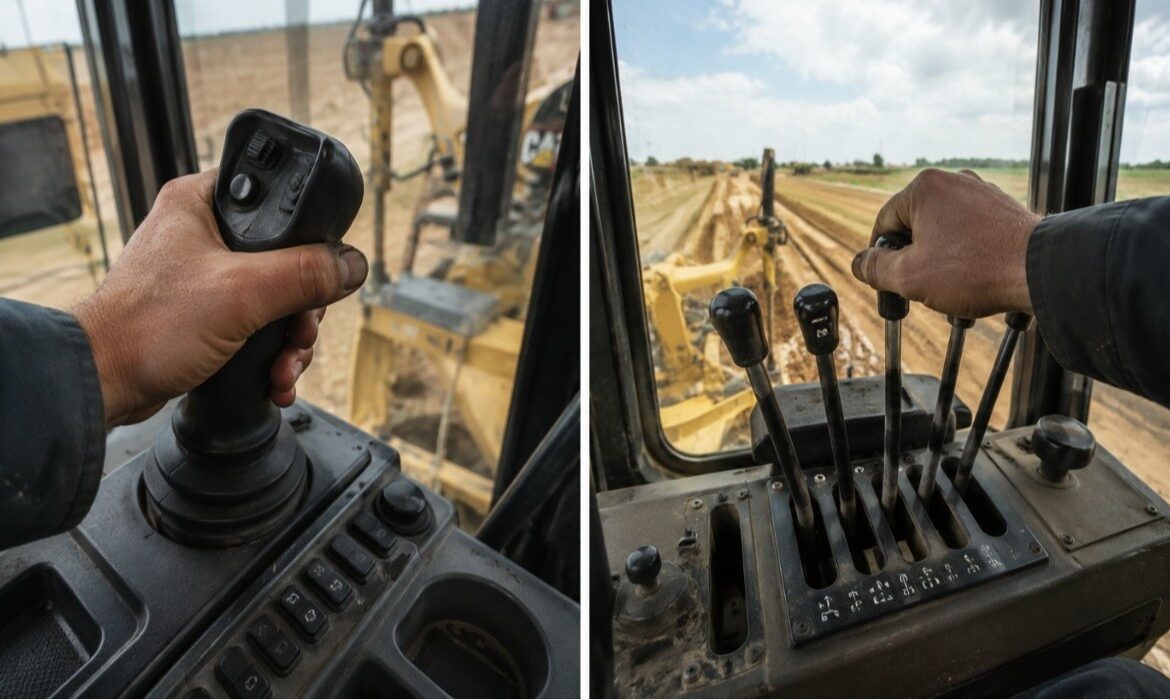
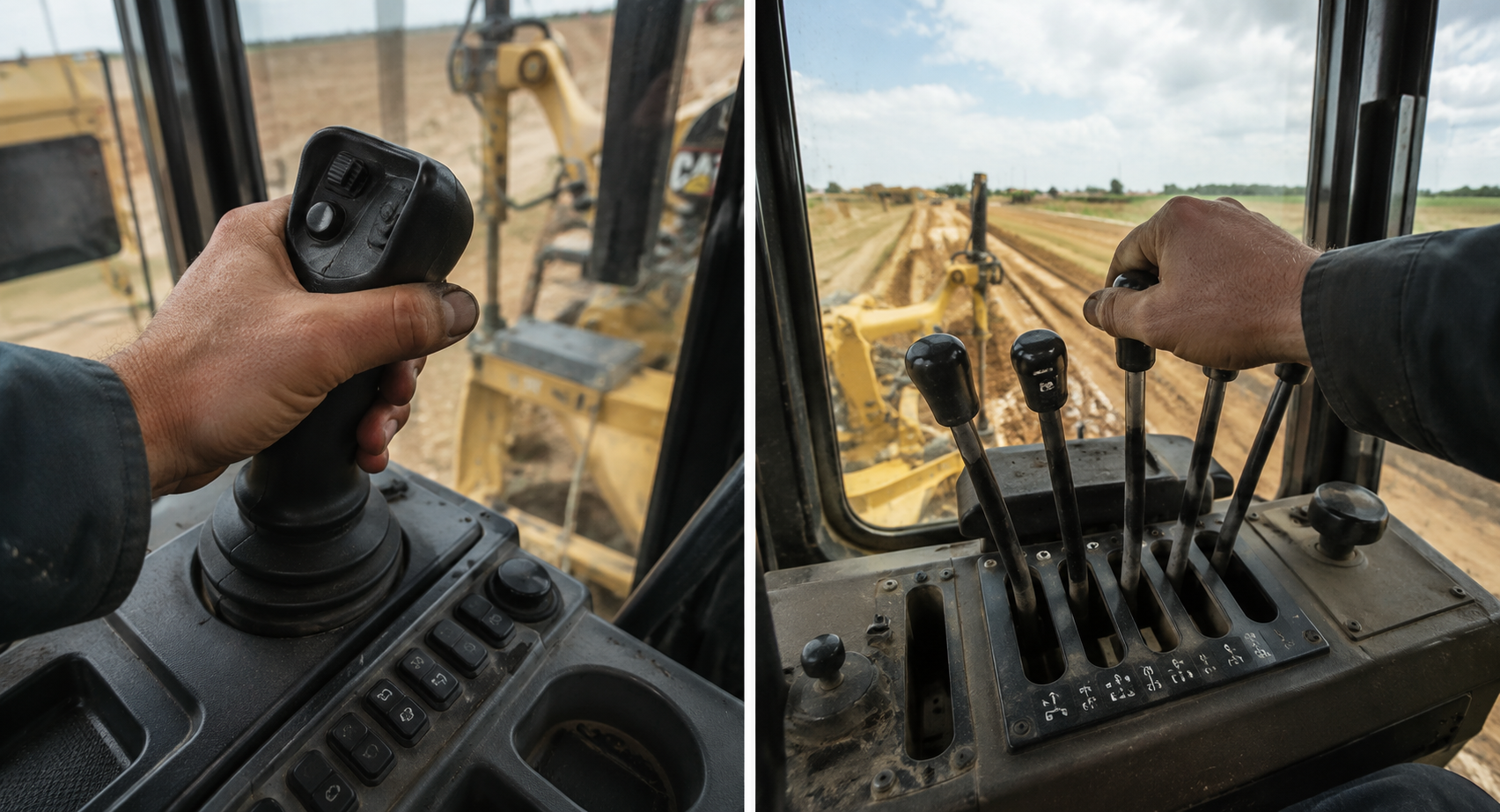
The layout differences in joystick vs lever motor grader controls start with the basic design. Lever controls use separate mechanical levers for each function. Blade lift uses two levers, sideshift uses a separate lever, circle rotate uses another, and articulation uses a steering wheel or lever. A typical lever cab has 6 to 8 control levers.
On the other hand, joystick systems use two pilot-operated joysticks. One joystick controls blade lift and sideshift, while the second controls circle rotate and articulation. Steering uses a separate wheel or integrated joystick steering.
Let us examine the pros of joystick vs lever motor grader controls.
First is operator fatigue. Joysticks require far less physical effort. A lever operator moves his whole arm, but a joystick operator moves his wrist and fingers. Testing showed a 78 percent reduction in hand and wrist movements. Less fatigue means better focus and fewer mistakes. One contractor reported operators working two extra hours without breaks after switching to joysticks.
The second pro of joystick vs lever motor grader controls is visibility. Joystick cabs position the operator lower and more central. Lever cabs need tall control boxes that block side windows. Joystick controls mount on a slim console, keeping windows clear. A Volvo study found joystick operators identified obstacles 40 percent faster.
The third pro of joystick vs lever motor grader controls is the learning curve for new operators. Young operators grew up with video game controllers and adapt to joysticks in days. Lever controls take weeks. A training school showed lever students needed 40 hours for basic proficiency, while joystick students needed just 15 hours.
The fourth pro of joystick vs lever motor grader controls is precision feathering. Joystick valves use pilot hydraulics; a small movement gives a small blade shift. Lever valves use direct mechanical linkage, making tiny adjustments harder. Joystick operators can easily hold a final grade tolerance of plus or minus a quarter inch.
The fifth pro of joystick vs lever motor grader controls is reduced cab space requirements. Joystick consoles take less floor space, giving operators a clear floor to easily reposition their bodies during long shifts. Lower back pain reports dropped 30 percent in one fleet after making the switch.
The sixth pro of joystick vs lever motor grader controls is integration with grade control. GPS and laser systems need electronic inputs, which joysticks easily provide without add-on sensors that fail or lose calibration.
The seventh pro of joystick vs lever motor grader controls is the follow steer function. The computer steers the front wheels to follow the blade automatically. This cuts steering corrections by 60 percent, drastically speeding up passes.
Now we examine the cons of joystick vs lever motor grader controls.
The first con of joystick vs lever motor grader controls is repair cost. Joystick systems use electronic control modules and wiring harnesses. A joystick replacement can cost up to 1500 dollars, while a lever linkage repair costs 50 dollars for a pin and bushing. You also need specialized diagnostic tools for electronics.
The second con is electrical failure risk. joystick vs lever motor grader controls differ in failure modes. Joysticks fail instantly when water enters wiring or a fuse blows, leaving the machine dead. Levers fail slowly, giving you warning as a pin wears out and gets loose over weeks.
The third con of joystick vs lever motor grader controls is operator preference for feel. Veteran operators know the exact lever position for every angle and can feel hydraulic pressure through the lever. Joysticks provide no pressure feedback, leading 65 percent of surveyed operators to prefer the direct connection of levers.
The fourth con of joystick vs lever motor grader controls is slower emergency response. A lever operator keeps both hands on dedicated controls and moves them instantly. A joystick operator uses one hand for multiple functions and takes 0.5 seconds longer to react in a close-quarters emergency.
The fifth con of joystick vs lever motor grader controls is higher initial purchase price. A joystick-equipped grader costs 8000 to 12000 dollars more than an equivalent lever grader. Total first-year costs increase further if dealers charge extra for required diagnostic software.
The sixth con of joystick vs lever motor grader controls is cold weather performance. Below freezing, moisture in a joystick base can freeze, causing delayed response. Ice on lever linkages can simply be broken free with a hammer, making them far more reliable in sub-zero temperatures.
The seventh con of joystick vs lever motor grader controls is lack of muscle memory transfer. An operator trained on one cannot easily run the other, causing severe flexibility problems across your fleet if a machine breaks down.
Let us put numbers on the joystick vs lever motor grader controls debate. Caterpillar reports that 40 percent of new buyers choose joysticks, Deere reports 35 percent, and Volvo reports 45 percent. The market is split.
Choose Joysticks If:
- You need fine highway grading
- You hire young operators
- You want lower operator fatigue
Choose Levers If:
- You do heavy rough cutting
- You have veteran operators
- You work in freezing conditions
If you are evaluating different setups, you might also want to read our guide on comparing the top motor grader brands of 2026.
A hybrid solution exists. Some manufacturers offer lever controls with electronic pilot assist. You get the lever feel while gaining some precision benefits, and they cost less than full electronics. Ask your dealer about these hybrid options.
When upgrading your fleet, consider checking out premium heavy equipment solutions to ensure you get the best parts and machines for your specific needs.
Test both joystick vs lever motor grader controls before buying. Spend four hours on each machine, grade a road section, and measure your fatigue level.
Your decision on joystick vs lever motor grader controls impacts daily production, training costs, and operator retention. Match your job conditions to these pros and cons, and your answer will become clear.
▶ Control Demonstration – Watch It Work
Ready to find the perfect equipment for your job site? We provide top-quality machinery shipped anywhere in the world. Get a free quote from our team today.
Get a Free Quote →Heavy equipment content powered by TyphonMachinery.com