
☰ Table of Contents
A single operator error wastes fuel, wears out tires faster, and tears up the road surface. You lose production time, operating costs go up, and road quality goes down. This post covers five common motor grader operator mistakes.
You will learn how to fix each one using specific numbers and techniques. Apply these changes to save money, get better results, and eliminate frequent motor grader operator mistakes.
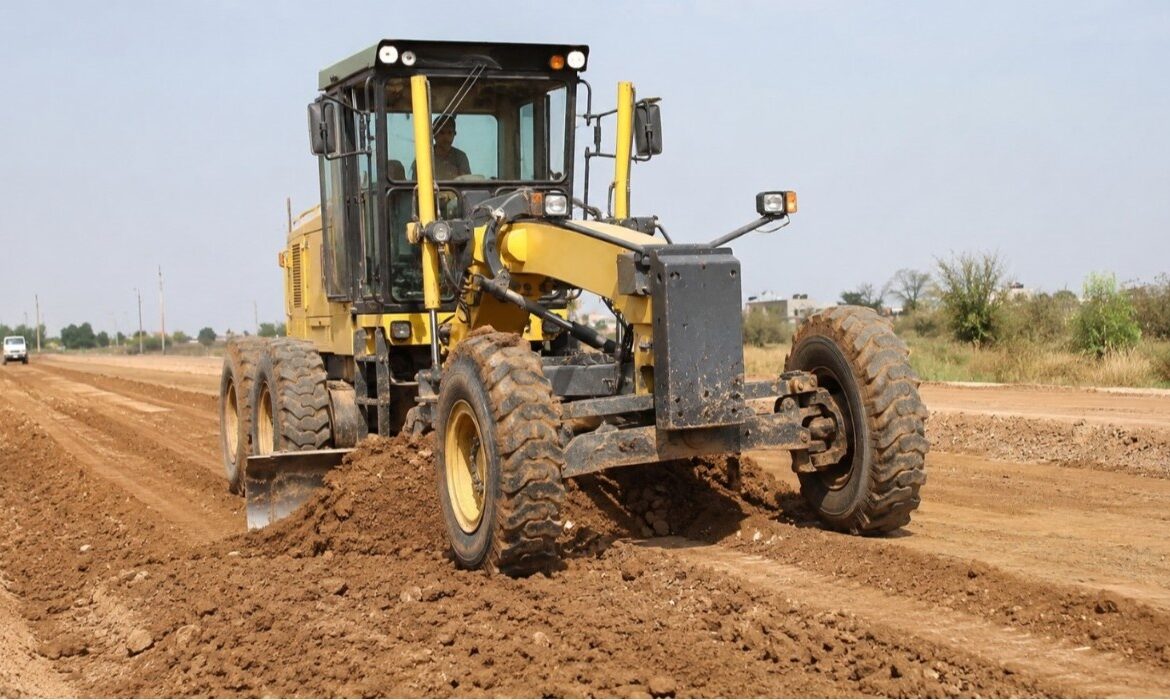
Many motor grader operator mistakes start with the blade angle. Many operators set the blade wrong by pushing material straight ahead like a dozer. A grader blade must roll material sideways. Pushing creates windrows, and you then need extra passes to spread that windrow. Each extra pass burns fuel and adds machine hours, which is why fixing this is crucial to reducing motor grader operator mistakes.
The correct blade angle is 30 to 45 degrees relative to the direction of travel. At this angle, dirt rolls across the blade face. One contractor reduced pass counts from six to three and saved 40 percent on fuel. That is a real fix for one of the most common motor grader operator mistakes.
How to Fix It: Stop the machine. Look at the blade from the side. The leading edge should point toward the rear tire on the same side (close to 35 degrees). Make small adjustments until material flows smoothly.
Other frequent motor grader operator mistakes involve the moldboard pitch. Pitch is the tilt of the blade forward or backward. Too much forward pitch digs the cutting edge into the ground, causing the machine to bounce. Washboards are the classic cost of such motor grader operator mistakes. Conversely, too much backward pitch makes the blade ride over the material without cutting anything.
For fine grading, set the blade top forward 2 to 4 degrees. For heavy cutting, set the blade vertical or slightly back. Test your pitch on a short section. A smooth cut means correct pitch. One site supervisor corrected an 8-degree forward pitch on a two-mile road, reducing haul truck tire wear by 20 percent.
A third category of motor grader operator mistakes is ignoring circle and drawbar wear. These parts have bushings and pins that wear over time, creating slop. Slop means the blade wanders, and you cannot hold a consistent grade, forcing extra corrective passes.
Measure the slope by raising the blade six inches off the ground and pushing the tip with a pry bar. More than one inch of movement means worn parts. A fleet manager saved $400 in fuel on a single job after replacing worn circle bushings, proving that overlooking maintenance leads to costly motor grader operator mistakes.
The fourth area of motor grader operator mistakes relates to speed control. Running the machine too fast reduces blade control, causes bouncing, and leaves a rough surface. Speeding is a major contributor to motor grader operator mistakes.
The correct speed for fine grading is 2 to 4 miles per hour. For rough grading and slot dozing, you can run 5 to 7 miles per hour. Test your speed on a 200-foot section. If you finish in less than 30 seconds for fine grading, you are too fast.
Slowing down provides a smoother cut with no chatter marks. Getting speed right is the opposite of committing motor grader operator mistakes. In Texas, slowing operators from 7 mph to 3 mph reduced handwork by 60 percent and completely eliminated these motor grader operator mistakes.

The fifth set of motor grader operator mistakes is improper use of articulation. Many operators only turn the front wheels, limiting their ability to cut consistent slopes and increasing turning radius. Avoiding this falls under the most easily preventable motor grader operator mistakes.
Use articulation to shift the blade left or right without turning front wheels. For a ditch slope, articulate 10 degrees toward the ditch to reach further. On straight roads, articulate 5 degrees left and steer right to keep tandem tires on compacted ground. One municipal operator fixed this error and cut snow back in one pass, showing how costly motor grader operator mistakes can be if ignored.
A trained operator on a familiar machine makes far fewer motor grader operator mistakes. Modern graders have telematics showing speed, idle time, and blade position. Use this telematics data to find and correct motor grader operator mistakes.
Basic maintenance is also vital. A machine with dull cutting edges causes even more motor grader operator mistakes. Change your cutting edges when the wear limit reaches one inch from the bolt holes.
Check tire pressure weekly. Uneven pressure makes the grader lean, forcing constant overcorrection. This simple tire check eliminates one common source of motor grader operator mistakes.
Proactive Steps
- Follow written SOPs
- Train operators monthly
- Monitor telematics data
Costly Ignorance
- Skipping tire checks
- Running dull edges
- Ignoring feedback vibration
For operations expanding their equipment, exploring new vs used motor grader options ensures you have reliable machinery. Reliable equipment matched with high-quality attachments from Typhon Machinery helps operators achieve perfect grades.
Review the five motor grader operator mistakes covered here:
- Wrong blade angle (Use 30 to 45 degrees)
- Incorrect moldboard pitch (Use 2 to 4 degrees forward)
- Worn circle and drawbar parts (Replace bushings)
- Excessive speed (Keep below 4 mph for fine grading)
- No articulation use (Articulate 5 to 15 degrees)
Pick one of these issues to fix this week. Start with your blade angle. That improvement saves fuel, reduces wear, and builds better roads, ensuring your projects run at peak efficiency.
▶ Avoiding Operator Mistakes – Watch It Work
Ready to upgrade your heavy equipment? We provide top-quality machinery shipped anywhere in the world. Eliminate downtime and get a free quote from our team today.
Get a Free Quote →Heavy equipment content powered by TyphonMachinery.com