☰ Table of Contents
- Fact 1: The Blade Has a Second Job
- Fact 2: Operators Steer With Their Feet
- Fact 3: The Circle Costs as Much as a Car
- Fact 4: Graders Weigh Less Than You Think
- Fact 5: Moves 500 Tons Per Hour
- Fact 6: Creates Road Crowns Automatically
- Fact 7: The Front Wheels Lean Into Turns
- Fact 8: Three Separate Steering Systems
- Fact 9: Blade Cutting Edges Flip Four Times
- Fact 10: Works in Reverse as Well
- Bonus Fact: First Grader in 1885
- Why These Facts Matter to You
- Common Myths Busted
- Quick Reference Table
You see motor graders on road crews every day. You know they make flat surfaces. But many details about these machines stay hidden from most people.
This list reveals 10 shocking facts about motor graders that you did not know. These facts about motor graders will change how you look at these machines entirely. Let us start.
Most people think the grader blade only cuts and levels dirt. That is wrong. The blade also mixes materials. This is one of the most useful facts about these machines.
Road crews use the blade to mix cement into soil. They use it to blend gravel with sand. The curved blade rolls material over itself, and this mixing action perfectly stabilizes road bases.
No other machine does this as efficiently. A bulldozer cannot mix. An excavator cannot mix. Only a grader. These facts about motor graders prove that one machine beautifully does two jobs.
Here is something surprising in this list. The steering wheel controls the front wheels, but the finest steering actually happens with foot pedals.
Each rear wheel has a separate brake pedal. Press the left brake, and the machine turns left. Press the right brake, and the machine turns right. Skilled operators use both hands and both feet at the exact same time.
Many novice operators never learn this trick. But these facts about motor graders show that foot steering gives you unmatched precision on a job site.
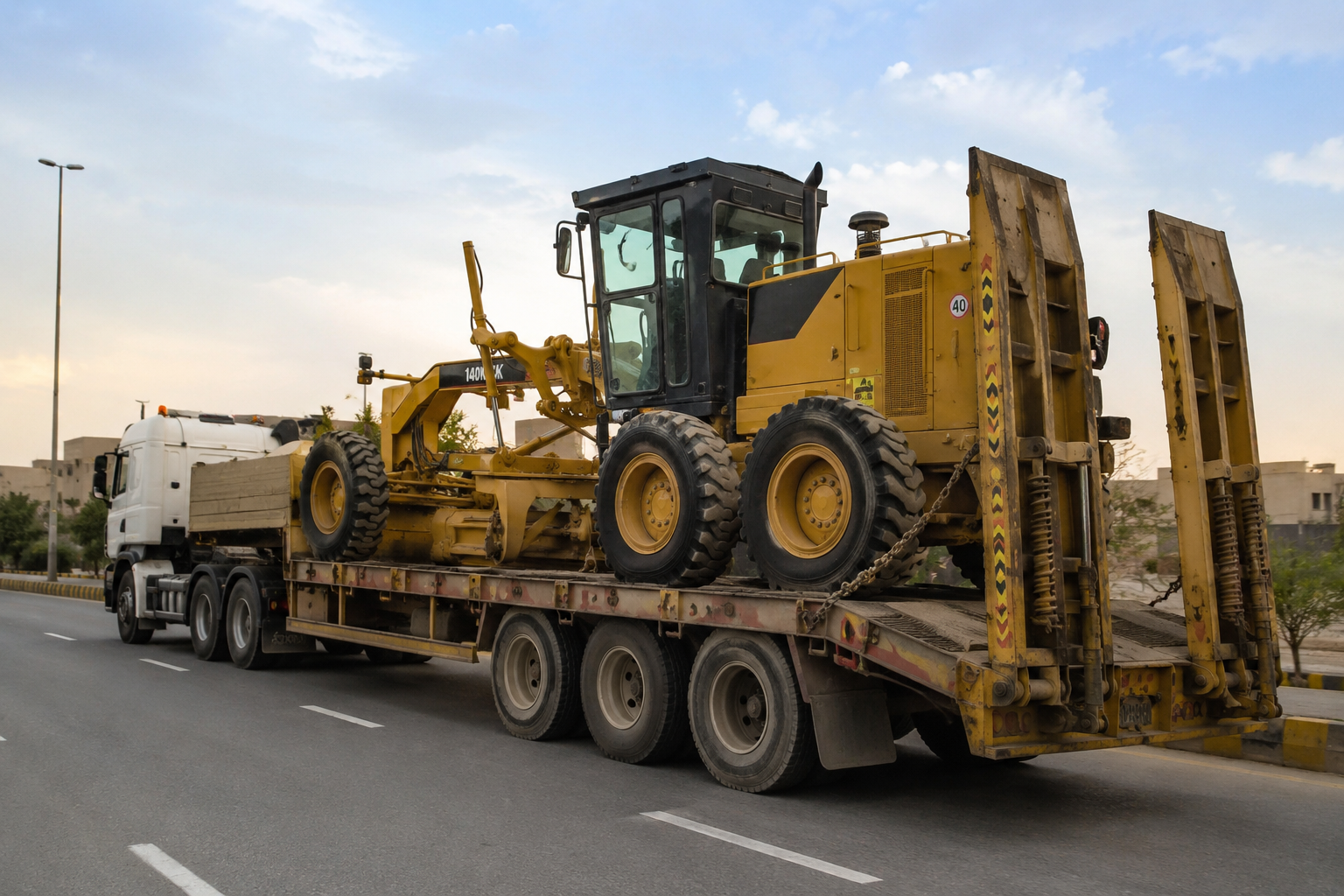
This is one of the most expensive truths about these machines. The circle is the heavy round gear under the blade that rotates it a full 360 degrees.
Cost Breakdown: A brand new circle for a full-size grader costs between $8,000 to $12,000. That is more than many used cars. Additionally, the circle has teeth that wear down, and replacing just those teeth costs around $2,000.
If you ignore these facts about motor graders and neglect daily greasing, you will pay thousands in unnecessary repairs.
Many people assume graders are heavy like bulldozers. These details will surprise you.
A full-size motor grader weighs roughly 25,000 to 40,000 pounds. Meanwhile, a full-size bulldozer weighs between 40,000 and 120,000 pounds. The grader is significantly lighter because it operates on wheels instead of heavy steel tracks.
This lighter weight means less ground damage. You can comfortably drive a grader on finished pavement without cracking it. A dozer will destroy that same pavement instantly. These facts about motor graders make them the right choice for finished sites.
This is one of the most impressive grader facts. A skilled operator can move up to 500 tons of material per hour. That equals roughly 25 dump truck loads.
The operator is able to cut, spread, and level the material all in a single pass. While a dozer might move more material per hour, it does so with far less accuracy. A hand crew moves maybe 5 tons per hour, meaning the grader is 100 times faster than manual labor.
When you understand these facts about motor graders, you realize exactly why contractors rent them for every major road project.
Roads desperately need a crown. The crown is a high point in the center that ensures water runs off the sides smoothly. Here is what most people do not know in these machine stats.
A grader creates this crown with a brilliantly simple trick. The operator sets the blade at a slight angle. The right side of the blade cuts deeper, while the left side cuts shallower.
The result is a perfect 2 percent slope from the center to the edge. No expensive laser needed. No GPS needed. Just a highly skilled operator who understands these facts about motor graders.
Car wheels stay vertical when you turn. Grader front wheels actually lean. The operator can lean the wheels up to 18 degrees. Leaning physically pushes the machine into the turn, which actively prevents it from sliding sideways on loose dirt.
Because of this, you can safely turn at higher speeds without losing control. This is one of those facts about motor graders that saves lives on steep, dangerous slopes.
A grader without leaning wheels will slide right off a muddy road. A grader utilizing leaning wheels stays firmly on track.
Most machines have just one steering system. Not a grader. These grader facts will blow your mind.
- The Steering Wheel: It conventionally turns the front wheels.
- The Brake Pedals: They independently steer the rear wheels.
- The Articulation Joint: The machine bends entirely in the middle, turning the front half up to 20 degrees.
If you use all three systems together, the grader turns in a tight circle actually smaller than its own length. Without these facts about motor graders, new operators severely struggle to maneuver in tight spaces.
The blade is fitted with a cutting edge made of hardened steel. As it scrapes the ground, the edge wears down on one side.
Instead of throwing it away, you simply unbolt and flip the edge to a fresh side. You can repeat this rotation four times! Each edge lasts between 200 to 400 hours, meaning total blade life stretches to 800 to 1,600 hours.
Considering a new cutting edge costs $300 to $600, these facts about motor graders actively save you money. Do not buy a whole new blade; just flip the edge.
Most heavy machines work very poorly in reverse. However, the grader works almost equally well backward.
You can rotate the blade a full 180 degrees so that it faces the rear of the machine. As you drive in reverse, the grader successfully “back grades.”
Back grading smooths out annoying washboard bumps. It also efficiently spreads material in tight, confined spaces where you physically cannot turn the machine around. These facts about motor graders prove that reverse is absolutely not a weakness—it is a built-in feature.
A man named J.D. Adams built the very first road grader. Horses pulled the heavy blade, and the operator walked behind it on foot. The machine had zero engine, zero seat, and zero steering wheel.
Remarkably, modern graders still share that exact same basic blade design. The fundamental curve and shape of the blade have not changed in 140 years. Among all facts about motor graders, this one beautifully shows just how perfect the original 1885 design truly was.
You now know what a motor grader does exceptionally well. You know it mixes materials, creates precise crowns, turns in tight spaces, and works effectively in reverse. These facts about motor graders will directly help you plan your next road, site, or parking lot project.
- Rent smartly: Rent a grader instead of a dozer for finishing work. You will get a flatter surface, spend far less on fuel, and finish much faster.
- Hire a pro: A good operator uses all three steering systems, mixes materials flawlessly, and back grades in one pass. The operator is what makes the machine perform.
- Check the edge: Always check the blade edge before renting. A worn edge leaves a rough surface. Ask for a fresh edge or flip it yourself—it takes 20 minutes and saves hours of rework.
- Inspect the circle: Check the circular teeth. Worn teeth slip, meaning the blade will not hold its precise angle. You will fight the machine all day long.
| Common Myth | The Real Fact |
|---|---|
| Myth 1: A grader is just a small dozer. | Fact: A grader precisely mixes materials and finishes surfaces. A dozer does not. |
| Myth 2: Any operator can run a grader. | Fact: Foot steering, leaning wheels, and articulation take months to master. |
| Myth 3: Graders are slow and heavy. | Fact: Graders weigh less than dozers and can drive 25 mph on roads. |
| Myth 4: You do not need to maintain the edge. | Fact: A dull edge absolutely ruins the finish and heavily wastes fuel. |
These facts about motor graders effectively bust every single myth.
Use these facts about motor graders when comparing machines or estimating your next heavy construction job.
| Fact Category | Key Number / Specification |
|---|---|
| Circle Replacement Cost | $8,000 – $12,000 |
| Machine Weight Range | 25,000 – 40,000 lbs |
| Material Moved Per Hour | 500 tons |
| Front Wheel Lean Angle | 18 degrees |
| Blade Edge Flips | 4 times per edge |
| First Grader Invented In | 1885 |
Now you know 10 shocking facts about motor graders that most people simply do not know. These facts about motor graders are not just fun trivia. They practically save money. They save massive amounts of time. They save you from costly mistakes.
Share these facts about motor graders with your crew today. Use them to pick the right machine, and use them to get far better results. Your roads will last longer, your parking lots will drain water perfectly, and your customers will notice the huge difference.
And when someone asks you why the grader works better than the dozer for finishing work, you will have 10 powerful facts about motor graders to instantly give them. If you want to know more, read our deep dive on the Motor Grader vs Bulldozer comparison.
▶ Graders in Action – Watch and Learn
Looking for the right equipment after learning these secrets? Whether you need a grader or a reliable compactor, we provide machinery built to get the job done right.
Explore Our Machinery →Heavy equipment insights powered by TyphonMachinery.com